Let's be real from the start. You're not just looking at another dog. You're considering inviting a small, wrinkly, incredibly powerful couch potato who drools like a leaky faucet into your life. The Dogue de Bordeaux, or French Mastiff, is a breed that stops people in their tracks. That massive head, those soulful eyes, the sheer physical presence... it's unforgettable. I remember the first time I met one at a park. It wasn't barking or running; it was just sitting calmly next to its owner, surveying the scene like a benevolent, furry monarch. Everyone gave it a wide berth, but the owner just smiled. "He's a giant teddy bear," she said. And you know what? After spending years around them, talking to breeders, owners, and vets, I can tell you that's often true. But it's only half the story. This guide isn't a sugar-coated sales pitch. If you're serious about a Dogue de Bordeaux, you need the full picture—the heart-melting loyalty and the vet bills, the gentle nature and the stubborn streak. We're going to dig into everything: what it's really like to live with one, the health issues you absolutely must know about (they're not a healthy breed, let's just put that out there), and whether your lifestyle can actually handle 120+ pounds of pure love. Let's clear up the name first. It's pronounced "dohg duh bor-DOH." You'll also hear them called French Mastiffs, which is the English translation. They're one of the oldest French breeds, with roots that likely trace back to ancient molosser dogs used in war and for guarding estates. Some historians believe they might have been in France since before the Roman invasion. That's a long time to perfect the art of looking imposing while napping. Their modern history is tied to the Bordeaux region of France, where they were used for guarding homes and shops, and even for pulling carts (imagine that!). They nearly vanished after the World Wars but were revived by dedicated breeders. The breed got a huge, if slightly misleading, publicity boost from the 1989 Tom Hanks movie Turner & Hooch. Hooch was lovable chaos incarnate, and while the loyalty was spot-on, it made every potential owner think they could handle the chaos. Spoiler: many couldn't. The official breed standard, maintained by the Fédération Cynologique Internationale (FCI) and in the U.S. by the American Kennel Club (AKC), describes them as "stocky, powerfully built, and muscular." But that's just fancy talk for "built like a tank." This is where people get surprised. Given their history and looks, you'd expect a fierce, aloof guardian. And they are excellent guard dogs—their mere presence is a deterrent. But their working style is more about vigilance than aggression. They are watchers. They'll position themselves to see the main entry points of a home and just... observe. With their family, they are famously affectionate, calm, and even clingy. Many owners joke about having a 130-pound lap dog who has no concept of personal space. They tend to bond very closely with one or two people in particular. They are usually patient and gentle with children in their own family, but their sheer size means supervision is non-negotiable—a happy tail whip can clear a coffee table in seconds. Here's the flip side: they can be stubborn. They are intelligent but not necessarily eager to please in the way a Border Collie is. Training requires consistency, positive reinforcement (food is a great motivator!), and a lot of patience. You can't manhandle a Dogue de Bordeaux. If they don't want to move, you're not moving them. Early and extensive socialization is absolutely critical. A poorly socialized Dogue de Bordeaux can become fearfully reactive or overly protective, which is a dangerous scenario with a dog this powerful. I don't want to scare you off, but I would be doing you a massive disservice if I glossed over this. The breed's health is its greatest challenge. Responsible breeders test their dogs extensively, but even the best breeding cannot eliminate all risk. You must go into ownership with your eyes wide open and your savings account prepared. The Orthopedic Foundation for Animals (OFA) and the Dogue de Bordeaux Society of America maintain lists of recommended health screenings. Any breeder you talk to should be able to show you clearances for both parents in these key areas: So, what can you do? First, choose your breeder like your dog's life depends on it—because it does. A good breeder's goal is to improve the breed. They will: Be wary of anyone who has multiple litters available at once, sells puppies online with no questions asked, or cannot provide verifiable health clearances. The price for a well-bred Dogue de Bordeaux puppy from health-tested lines typically ranges from $2,500 to $4,000+. If that seems high, wait until you see the bill for a single hip replacement surgery. Speaking of money, let's break it down. The puppy price is just the entry fee. I've talked to owners who've spent over $15,000 in the first few years on surgeries and specialist care. You need to budget for this possibility. First-Year & Annual Estimates: And then there's the emergency fund. You should have at least $5,000-$10,000 accessible for an unexpected surgery. Pet insurance helps, but you often pay upfront and get reimbursed. Training starts the moment your puppy comes home. Socialization isn't just about meeting people and dogs (though that's vital). It's about exposing them to all sorts of sights, sounds, and surfaces in a positive way: garbage trucks, umbrellas, men with hats, children on bikes, slippery floors, the vet's office. The critical window is before 16 weeks. Basic obedience is essential for control. "Sit," "stay," "come," and most importantly, "leave it" are life-saving commands. Leash training is crucial because you cannot physically restrain a pulling Dogue de Bordeaux. A front-clip harness is a godsend. They are moderate-energy dogs. They need daily walks and some mental stimulation, but they are not marathon runners. Two 20-30 minute walks a day and some playtime in a securely fenced yard is usually sufficient. Because of their BOAS, avoid intense exercise, especially in warm weather. A tired Bordeaux is a good Bordeaux, but an overheated one is in mortal danger. Speaking of fences, yours must be secure, tall (at least 6 feet), and sunk into the ground. These are powerful dogs. An invisible fence will not contain them if they decide to chase something. Inside, they are calm. They want to be near you. Provide a large, orthopedic bed to support their joints. Be prepared for drool on your walls, windows, and ceiling (yes, ceiling—they shake their heads). Keep a towel by the door to wipe their jowls after they drink. Look, the Dogue de Bordeaux is a heart-stealer. There's a profound, quiet dignity to them that's hard to describe until you've lived with it. They will love you with every fiber of their being. But loving them back means accepting the whole package. You need to be financially secure, patient, and physically capable of handling a powerful animal. You need a home that can accommodate them. You need the emotional fortitude to face potentially serious health issues and a shorter time together. If, after all this, you're still reading and thinking "yes, this is the dog for me," then you might be one of the special few who can provide the perfect home for a French Mastiff. Do your homework, find that exceptional breeder, and get ready for a slobbery, expensive, and utterly unforgettable journey. And if you decide it's too much? That's okay too. It's the responsible choice. There are countless wonderful dogs in shelters and rescues, including mastiff-type mixes, who need homes. The goal is to match a dog to your life, not force your life to match a dream. Either way, I wish you the best of luck. And keep a towel handy.Quick Guide

What Exactly Is a Dogue de Bordeaux?
The Bordeaux Personality: Not Your Average Guard Dog
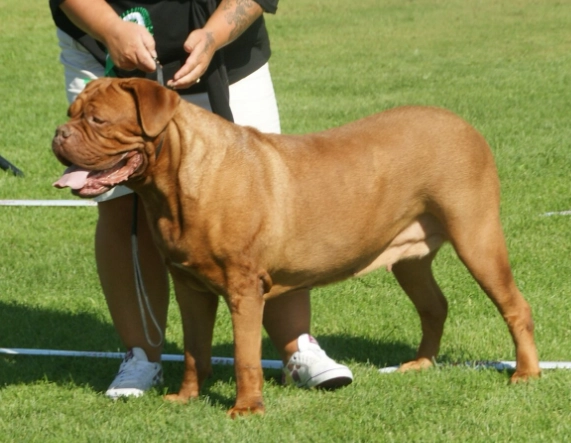
The Good Stuff (The Pros)
The Tough Stuff (The Cons)
A Deep Dive into Dogue de Bordeaux Health: What You MUST Know

Health Condition
What It Is
Management & Prevention
Hip & Elbow Dysplasia
Malformation of the joints leading to arthritis, pain, and lameness. Extremely common in giant breeds.
OFA or PennHIP screening of parents. Keep puppy lean during growth. Provide joint supplements (glucosamine/chondroitin). Use ramps, avoid slippery floors.
Heart Conditions (Aortic Stenosis)
A narrowing of the aorta, the major heart vessel. Can be mild or severe, sometimes fatal.
Cardiac exam by a specialist (not just a stethoscope check). Breeders should have hearts cleared by a cardiologist.
Brachycephalic Obstructive Airway Syndrome (BOAS)
Their short muzzle means constricted nostrils, elongated soft palate, and narrow trachea. They snore, snort, and can struggle to breathe.
Avoid exercise in heat/humidity. Use a harness, never a collar. In severe cases, surgery can widen nostrils/shorten palate.
Ectropion/Entropion
Eyelid issues where they roll out (ectropion) or in (entropion). Entropion causes eyelashes to scratch the eye.
Daily eye cleaning to prevent infection. Surgery can correct severe cases.
Bloat (GDV)
Life-threatening emergency where the stomach fills with gas and twists. Deep-chested breeds are high-risk.
Feed multiple small meals a day. Use a slow-feeder bowl. No vigorous exercise 1 hour before or 2 hours after eating. Know the nearest emergency vet.
Allergies & Skin Issues
Often food or environmental. Manifests in itchy skin, ear infections, and paw licking.
Wrinkle cleaning (daily!). High-quality diet. Work with a vet to identify triggers. Regular ear cleaning.

The Real Cost of Owning a French Mastiff
Training and Living with Your Bordeaux

Your Dogue de Bordeaux Questions, Answered
Final Thoughts: Is This Breed For You?

Key Takeaway Up Front: The Dogue de Bordeaux is a loyal, affectionate, and calm companion bred for guarding. They form intense bonds with their families. However, they are a brachycephalic (short-faced) giant breed with a tragically short average lifespan (often 5-8 years) and a predisposition to several serious health conditions. They are not a beginner's dog. Ownership requires significant financial preparation, patience in training, and a commitment to their specific care needs.
Let's Talk About Wrinkles: That adorable face fold is a breeding ground for yeast and bacteria. If you don't clean it daily (and I mean every single day) with a gentle, damp cloth and then dry it thoroughly, it will get infected, smelly, and sore for the dog. This is non-negotiable maintenance.
"Owning a Dogue de Bordeaux is a financial commitment that rivals a car payment. But when you look into those eyes, for most of us, it's worth every penny."
Q: Are Dogue de Bordeaux good with other pets?
A: It depends heavily on early socialization and individual temperament. They can do well with other dogs, especially if raised together, but same-sex aggression (particularly between males) is not uncommon in mastiff-type breeds. With cats and small animals, their high prey drive can be a problem. Never leave them unsupervised with smaller pets.
Q: How bad is the drooling, really?
A: It's constant. After they drink, after they eat, when they're hot, when they're excited. It will be on your clothes, your furniture, your car. If the sight of long, stringy saliva bothers you, this is not your breed. It's a fundamental part of their anatomy.
Q: Can they live in an apartment?
A: Surprisingly, yes, if their exercise needs are met. They are quiet and low-energy indoors. The bigger challenges in an apartment are their size (navigating elevators, stairs) and potential for joint issues on slippery hard floors. You must be committed to multiple daily walks, rain or shine.
Q: What's the best diet for a Dogue de Bordeaux?
A: A high-quality, large-breed puppy formula to support controlled growth, then a large-breed adult formula. Look for named meat proteins as the first ingredients. Many owners find success with diets formulated for joint health or allergies. Avoid overfeeding—keeping them lean is the single best thing you can do for their joint health. Consult your vet, and be wary of trends; what works for one dog may not work for another.
Q: How do I find a responsible breeder?
A: Start with the national breed club. In the U.S., that's the Dogue de Bordeaux Society of America (DDBSA). In the U.K., the Kennel Club lists accredited breeders. Attend dog shows to meet breeders in person. Ask every question on this list. A good breeder is your partner for life.
Comment