Let's be honest, when most people think of a "Pinscher," a sleek, black-and-tan Doberman pops into their head. But what if I told you there's an original, a classic model that predates the more famous cousin? That's the German Pinscher for you. It's like discovering the band that inspired your favorite rock star. This isn't some obscure, forgotten breed, though. Far from it. The German Pinscher is a living piece of canine history, a medium-sized powerhouse packed with intelligence, loyalty, and a spirit that demands respect. I've known a few over the years, and let me tell you, they leave an impression. They're the kind of dog that makes you rethink what you know about dog ownership. If you're here, you're probably past the "oh, what a cute dog" stage and knee-deep in research. Good. That's exactly where you need to be. Bringing a German Pinscher into your life isn't a casual decision. It's a commitment to a partner who is equal parts devoted guardian and mischievous comedian. This guide isn't going to sugarcoat things. We'll dig into the glorious highs and the challenging lows, the costs, the health stuff, and the real, day-to-day life with one of these charismatic dogs. By the end, you'll know if the German Pinscher temperament is a match for your lifestyle, or if you're better off admiring them from afar. Quick Fact Check: The German Pinscher is one of the foundational breeds for both the Doberman Pinscher and the Miniature Pinscher. They're recognized by major kennel clubs worldwide, including the American Kennel Club (AKC) and the UK Kennel Club. They sit in the "Working" or "Utility" group, a nod to their historical roles. To understand the German Pinscher, you have to go back a few centuries in Germany. This wasn't a breed created in a fancy kennel for show. They were the all-purpose farm and estate dog. Their job description was a mile long: ratter, guardian, drover, and companion. The name "Pinscher" itself is thought to come from an English word meaning "to pinch" or "to seize," which perfectly describes their lightning-fast ratting technique. They were the ultimate practical working dog. By the late 1800s, breeders began to standardize them. The wire-haired and smooth-haired varieties were initially considered the same breed, but eventually split, giving us the German Pinscher (smooth) and the Affenpinscher and Standard Schnauzer (wire). World Wars nearly wiped them out. Seriously, by the end of WWII, the breed was hanging on by a thread in West Germany. The comeback story is thanks to a handful of dedicated breeders, including a man named Werner Jung, who reportedly rebuilt the breed using oversize Miniature Pinschers and a few surviving dogs. It's a testament to the breed's resilience. I find this history fascinating because it explains so much about their character. This isn't a breed that's been coddled or softened for centuries on a lap. Their DNA is wired for work, for making quick decisions, and for being alert. You can't breed that out in a few decades, and you shouldn't want to. It's what makes them so uniquely brilliant and, frankly, a handful at times. This is the million-dollar question, right? What's it actually like to live with one? If I had to sum up the German Pinscher temperament in three words, I'd say: Confident, Spirited, and Attentive. But those are just labels. Let's break it down into something real. First, the good stuff that makes people fall in love. German Pinschers are fiercely loyal to their family. They form a deep bond and want to be involved in everything you do. Not in a needy, Velcro-dog way (though some can be), but in a curious, participatory way. They're incredibly clean dogs, almost cat-like in their fastidiousness. Many owners report they're easy to housebreak and keep themselves spotless. Their intelligence is off the charts. They learn commands quickly, solve puzzles for fun, and are always watching, always learning. This makes training a blast... when they're in the mood. They have a wonderful, dry sense of humor and can be incredibly playful and clownish with their loved ones. Now, the parts that aren't in the glossy brochure. That high intelligence comes with an independent streak. A German Pinscher will often ask "why?" before obeying. They get bored easily with repetition. This isn't a breed for robotic, drill-sergeant training. You need to be smarter, more interesting, and more consistent than they are. They have a high prey drive. Squirrels, rabbits, cats (sometimes even the family cat if not properly introduced), and anything that runs is fair game. A secure fence isn't a suggestion; it's an absolute requirement. Their guarding instincts are strong. They are naturally suspicious of strangers and will alert you to anything unusual. This can tip into reactivity or aggression if not properly socialized from a very young age. Straight Talk: The German Pinscher is not recommended for first-time dog owners. Their combination of intelligence, energy, strength, and willfulness requires an owner who understands canine psychology and can establish gentle, respectful leadership without being harsh. Harsh methods will backfire spectacularly with this breed. Energy levels? Think of a coiled spring. They need vigorous daily exercise—not just a walk around the block. A long run, a challenging hike, or a high-intensity play session is a must. A bored German Pinscher is a destructive German Pinscher. They'll find their own "work," like redesigning your couch or excavating your backyard. Elegant and powerful. That's the goal. They are square-proportioned (height at the withers roughly equals body length), muscular without being bulky, and move with a graceful, reaching trot that covers ground effortlessly. Their look is one of balanced athleticism. There's no wasted effort in their design. Overall, the German Pinscher is a robust, healthy breed with a lifespan of 12-14 years, sometimes longer. But like all purebreds, they have some predispositions. Responsible breeders test for these. The best thing you can do is buy from a breeder who openly shares health test results. Ask to see them. Don't just take their word for it. A good breeder is proud of their health testing and will want to show you. Let's talk money, because it's a big part of the decision. The German Pinscher puppy cost from a reputable, health-testing breeder typically ranges from $1,800 to $3,000+ in the US. Why so much? You're paying for the decades of careful breeding, all the health screenings (which cost the breeder thousands), prenatal care, early puppy socialization, and the breeder's lifelong support. Please, I'm begging you, avoid backyard breeders or puppy mills advertising "cheap" German Pinscher puppies. The upfront savings will almost certainly be spent later on vet bills and behavioral problems. A well-bred dog from a good line is an investment in predictability—in health, temperament, and structure. Initial purchase is just the start. Budget for: This is one of the most common searches, and for good reason. They're clearly related, but which is right for you? Here’s a head-to-head. Think of it this way: The German Pinscher is the original sports car—agile, quick, and requiring an engaged driver. The Doberman is the powerful luxury sedan—still performance-oriented but built on a larger, sometimes more predictable scale. Both are incredible, but they suit different lives. Forget dominance theory. With a German Pinscher, you need to be a partner and a leader they choose to follow. Positive reinforcement is king—using high-value treats, praise, and play. Keep sessions short, fun, and varied. They excel at dog sports like agility, barn hunt, obedience, and rally because these activities engage their brain and body. Early and ongoing socialization is non-negotiable. Expose them positively to all sorts of people, places, sounds, and other animals (carefully, due to prey drive). A trainer friend of mine who works with a lot of primitive and independent breeds once said, "You don't command a German Pinscher; you negotiate with one." It's the best description I've heard. You have to make them believe it was their idea. One 30-minute walk a day? That's a warm-up for this breed. They need at least 60-90 minutes of vigorous activity. This could be: Mental exercise is just as crucial. Food puzzles, scent work games, and learning new tricks will tire them out in a good way. This is the easy part. Their short coat needs a quick brush with a rubber curry or hound glove once a week to remove dead hair. They shed moderately. Baths only when necessary. Regular nail trims, ear checks, and dental care are the main focuses. They can be, but with major caveats. They do best with respectful, older children who understand how to interact with dogs. They have a low tolerance for poking, prodding, or being treated like a pillow. Their high energy can also accidentally knock over small kids. Supervision is always required. They are not typically the "nanny dog" type. Yes, surprisingly, they can thrive in an apartment—if their exercise needs are met exhaustively. They are quiet indoors (usually) and adapt well to smaller spaces as long as they get their daily physical and mental marathon outside. A house with a yard is easier, but the yard is not a substitute for active exercise. They are alert barkers. They will let you know about the mailman, a squirrel on the fence, or a leaf blowing suspiciously. It's a deep, authoritative bark. This can be managed with training (teaching a "quiet" cue) but not eliminated entirely. It's part of their watchdog DNA. This is very individual and depends heavily on early socialization. Their prey drive is strong. Many can learn to coexist peacefully with a family cat they are raised with, but the cat must have its own safe spaces. Small animals like rabbits, hamsters, or birds will always be at risk. Never leave them unsupervised together. Start with the national breed club. In the US, that's the German Pinscher Club of America (GPCA). They have a breeder referral list. A good breeder will: Adopting a German Pinscher is rare but not impossible. Check breed-specific rescues like the GPCA's rescue network. So, after all this, where do you stand? The German Pinscher is not a dog for everyone, and that's okay. They are a breed for an active, engaged, and patient owner who appreciates a thinking partner, not just an obedient pet. You might be a great match if: you're an experienced dog owner, you lead an active lifestyle (running, hiking, sports), you value intelligence and character over constant cuddliness, and you're committed to consistent, positive training and socialization from day one. You should probably look at other breeds if: you're a first-time owner, you want a low-energy couch companion, you have very young children, you need a dog that's universally friendly with every stranger, or you're away from home for long hours regularly. The German Pinscher is a rewarding, fascinating, and endlessly entertaining companion for the right person. They demand respect, challenge your skills, and in return, offer a loyalty and connection that is truly special. Do your homework, meet some in person (contact the breed club for events), and be brutally honest with yourself about your lifestyle. If it's a match, you're in for an incredible adventure with one of dogdom's true originals.Quick Navigation
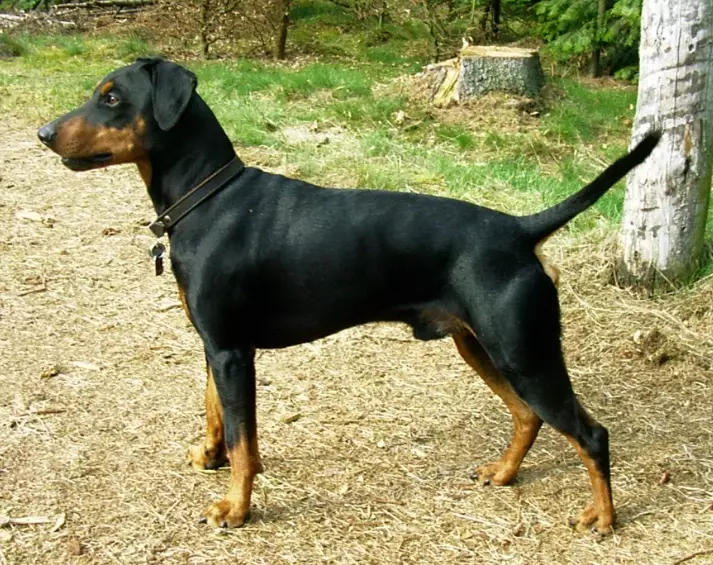
Where Did This Dog Come From? A Dash of History
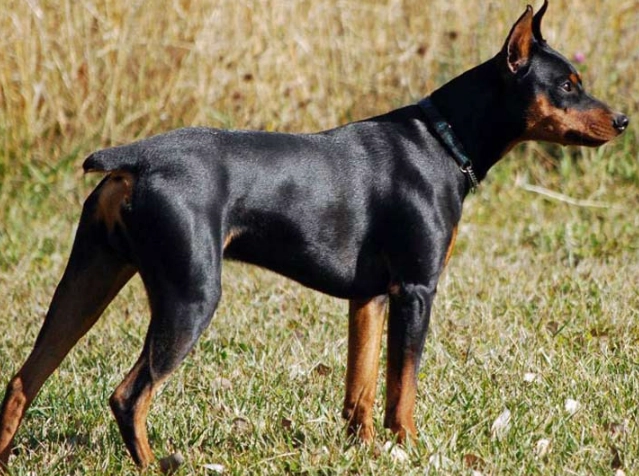
Getting to Know the German Pinscher Temperament: The Good, The Stubborn, The Brilliant
The Glowing Highlights
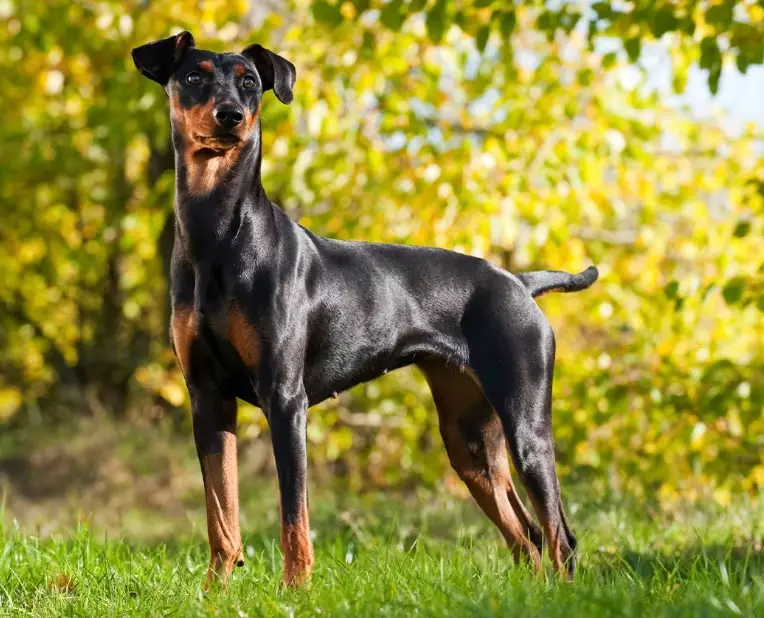
The Reality Checks (Let's Be Fair)
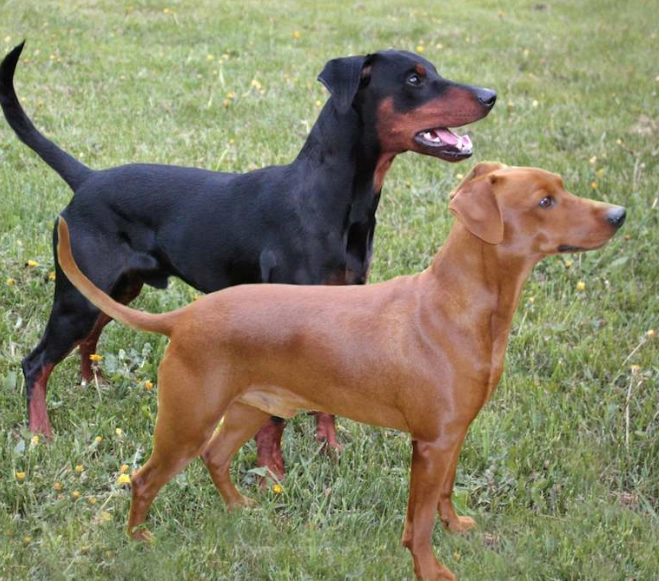
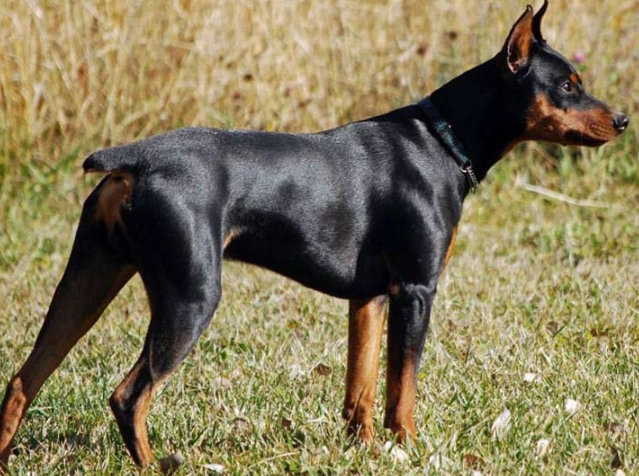
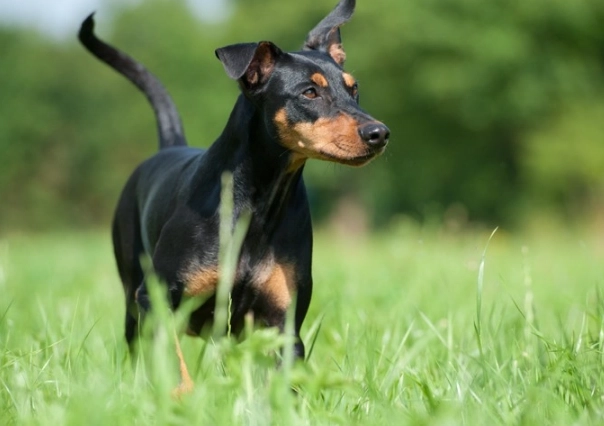
What Does a German Pinscher Look Like? The Breed Standard
Feature
Description
Note
Size
Medium. Typically 17-20 inches at the shoulder.
Males are noticeably more substantial than females.
Weight
25-45 pounds.
They are surprisingly dense and solid for their size.
Coat
Short, dense, smooth, and shiny. Lies close to the body.
Extremely low-maintenance grooming-wise.
Color
Solid red (various shades from stag red to deep tan) or black & blue with sharply defined tan/rust points.
Liver (brown) and solid blue are faults in the show ring but can occur.
Eyes
Dark, medium-sized, oval. Expression is alert and keen.
A light or yellowish eye is considered a fault.
Ears & Tail
Traditionally cropped and docked in some countries.
Natural ears (V-shaped, folded) and tails are increasingly common and accepted, depending on local laws.
Keeping a German Pinscher Healthy: What You Need to Watch
The Real Cost of a German Pinscher Puppy (and Beyond)
• High-quality food: $60-$80/month.
• Annual vet care (shots, check-ups): $300-$600/year.
• Training classes (ESSENTIAL): $100-$200 for a basic course.
• Pet insurance: $30-$70/month (highly recommended).
• Supplies, toys, grooming: A few hundred upfront.German Pinscher vs Doberman: Settling the Classic Comparison
Aspect
German Pinscher
Doberman Pinscher
Size
Medium (25-45 lbs, 17-20")
Large (60-100 lbs, 24-28")
Origin
Older, foundational breed
Developed in the 1890s by Karl Dobermann, using GP as a key component.
Energy Level
Very High. Needs intense daily output.
High, but often more endurance-focused. Still needs a lot of exercise.
Temperament
Spirited, independent, keenly alert. Can be more aloof with strangers.
Often described as more eager to please, slightly more biddable in training. Still a strong guardian.
Family Fit
Best with older children, dog-savvy families. Can be too intense for toddlers.
Can be excellent with kids in the family when raised with them, but size can be an issue.
Grooming
Extremely low. Weekly brush.
Very low. Similar short coat.
Lifespan
Often 12-14+ years.
10-12 years on average.
Living With a German Pinscher: Training, Exercise, and Daily Life
Training That Actually Works
The Exercise Non-Negotiable
Grooming? A Breeze.
Frequently Asked Questions About German Pinschers
Are German Pinschers good with kids?
Are German Pinschers good apartment dogs?
Do German Pinschers bark a lot?
Can a German Pinscher live with cats or other small pets?
How do I find a reputable German Pinscher breeder?
Final Thoughts: Is the German Pinscher Right For You?
The German Pinscher: Your Complete Guide to the Original Pinscher
Comment