You're scrolling through photos of adorable, cloud-like dogs. One has a pointed fox face and a mane of white fur. Another is a tiny, smiling puffball in orange, black, or cream. You're smitten. But is that an American Eskimo Dog or a Pomeranian? More importantly, which one would actually fit into *your* life? They look similar at a glance—both are spitz-type dogs with plush coats and perky ears—but living with them is a completely different story. I've spent years around both breeds, from helping friends train their stubborn Poms to watching a neighbor's Eskie meticulously learn new tricks. The differences go way deeper than size and color. Choosing between them isn't just about cuteness; it's about matching a complex personality and a demanding grooming schedule to your lifestyle. Let's cut through the fluff and get real about what it's like to live with each of these charismatic dogs. First, let's clear up the identity crisis. Yes, they're related. Both descend from larger German Spitz dogs. But decades of selective breeding have carved out distinct profiles. The most immediate giveaway is color and size. If it's not white, it's not an American Eskimo Dog. If it weighs more than 10 pounds and is white, it's almost certainly an Eskie, not a white Pom. This is where you'll feel the biggest difference in daily life. Forget looks; personality is king. American Eskimos are whip-smart. I'm talking "learn a new trick in three repetitions" smart. They were bred as all-purpose farm dogs and companions, which means they have a strong desire to work *with* you. They thrive on having a job, whether it's advanced obedience, agility, or learning the names of all their toys. This intelligence comes with a need for mental stimulation. A bored Eskie is a creative one—and you might not like their creativity (think: redesigning your sofa cushions). They are typically more reserved with strangers than Pomeranians, making them excellent watchdogs. They'll bark to alert you, but they're not usually yappy without reason. With their family, they are devoted, playful, and often form a particularly strong bond with one person. Here's the subtle error many make: assuming their eagerness to please makes them pushovers. They can be surprisingly stubborn if they sense you're inconsistent. They test boundaries, much like a clever child. Pomeranians possess intelligence too, but it's often channeled differently. They are savvy, observant, and incredibly in tune with their people's emotions. However, they have a strong independent streak. A Pom might perfectly understand the "come" command but decide that the squirrel outside is a higher priority. Training requires finesse, turning it into a fun game, and a truckload of patience. Their most defining trait is their outsized confidence. They rarely seem to comprehend their own tiny size, often fearlessly approaching much larger dogs (which owners must carefully manage for safety). This confidence can tip into stubbornness and a touch of diva-like behavior. They know they're adorable and aren't afraid to use it to get what they want. Poms are generally more extroverted and accepting of strangers than Eskies, though they remain excellent alert barkers. Their barking can be more frequent and high-pitched, often triggered by... well, anything interesting. Managing this is a key part of Pom ownership. Can they live in an apartment? The short answer is yes for both, but the daily reality differs. American Eskimo Exercise Needs: Moderate to high. That Standard Eskie needs a solid 45-60 minutes of active exercise daily. The Toys and Minis need slightly less but still crave activity. This isn't just a walk around the block. They need running, playing fetch, hiking, or dog sports to burn off their working-dog energy. They excel in agility and love the challenge. Without it, expect restlessness and potential behavior issues. Pomeranian Exercise Needs: Moderate. A couple of 20-30 minute walks a day plus indoor play is usually sufficient. Their small legs tire faster. The challenge with Poms is often mental stimulation—puzzle toys and short, fun training sessions are crucial to prevent boredom barking. Space: Both adapt to apartments, but the Pomeranian's lower physical exercise requirement makes it a slightly more natural fit for small spaces. However, the American Eskimo will be perfectly happy in an apartment *if* you are religious about meeting their exercise needs elsewhere. The Noise Factor: Both are vocal. Eskies bark to alert. Poms bark to alert, comment, and sometimes just to hear their own voice. Early, consistent training on a "quiet" command is essential for peaceful coexistence in any shared living space. Let's be blunt: you are signing up for a significant time and financial investment with either breed. But the scale is different. American Eskimo Grooming: Their stunning white double coat is a magnet for dirt and a nightmare for mats. It requires brushing at least 2-3 times per week with a slicker brush and undercoat rake. During shedding seasons (spring and fall), you'll need to brush daily unless you want your home to look like it snowed indoors. Professional grooming every 4-6 weeks is highly recommended for a thorough bath, blow-out, and trim. That white coat also shows tear stains easily, requiring regular face cleaning. Pomeranian Grooming: That glorious puffball coat is equally high-maintenance. Daily brushing is ideal to prevent mats and tangles, especially in the feathered areas behind the ears and legs. Many owners opt for a professional "puppy cut" or "teddy bear cut" every 3-4 weeks to keep the coat manageable and cute. Even with a shorter trim, regular brushing is non-negotiable. Their smaller size makes home bathing easier than with an Eskie, but the density of the coat is deceptive. The cost difference is real. Grooming an Eskie costs more per session due to the time and product required. Grooming a Pom may cost less per visit but might be needed more frequently to maintain a specific look. Both are generally healthy, long-lived breeds, but they have their predispositions. Always choose a reputable breeder who does health testing. American Eskimo Health: Prone to hip dysplasia (especially in Standards), progressive retinal atrophy (PRA), and luxating patellas. Their lifespan is typically 13-15 years. Pomeranian Health: Their tiny size brings specific concerns: luxating patellas (very common), tracheal collapse (use a harness, never a collar!), dental issues (small mouths mean crowded teeth, requiring diligent brushing), and hypoglycemia in puppies. Their average lifespan is slightly longer at 12-16 years. The fragility of the Pomeranian cannot be overstated. A jump off the couch can result in a broken leg. This makes them a less ideal choice for families with very young, unpredictable children. Still stuck? Ask yourself these questions: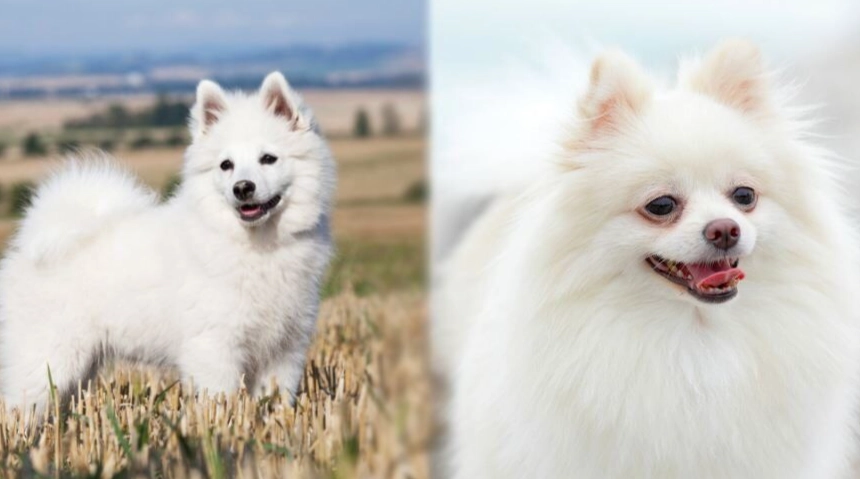
What's Inside This Guide
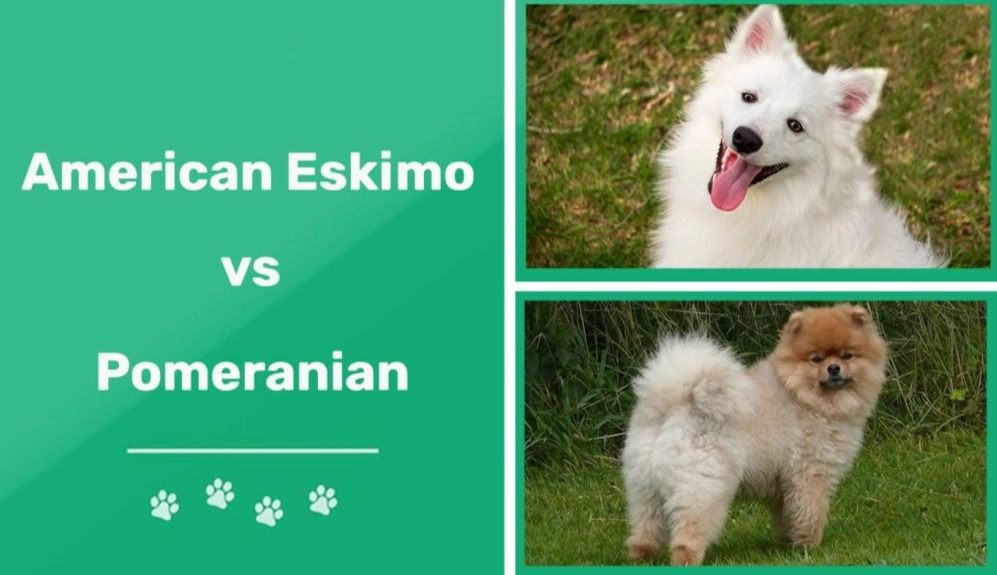
Visual Differences at a Glance
Feature
American Eskimo Dog
Pomeranian
Size & Weight
Comes in 3 sizes: Toy (9-12 in), Miniature (12-15 in), Standard (15-19 in). Weight: 6-35 lbs.
One tiny size: 6-7 inches tall. Weight: 3-7 lbs. (Teacup Poms are not a standard size and come with severe health risks).
Coat Color
Pure white or white with biscuit cream. That's it. No other colors are accepted in the breed standard.
A rainbow! Orange, red, cream, sable, black, blue, chocolate, plus parti-colors (white with patches).
Build
More substantial, sturdy, and rectangular. They look like a small, athletic working dog.
Extremely fine-boned and delicate. They have a distinctive "puffy" appearance due to a stand-off undercoat.
Tail
Carried over the back in a loose plume.
Heavily plumed and lies flat and straight over the back.
Expression
Alert, intelligent, often with a keen "thinking" look.
Fox-like, bright, and sometimes mischievous.
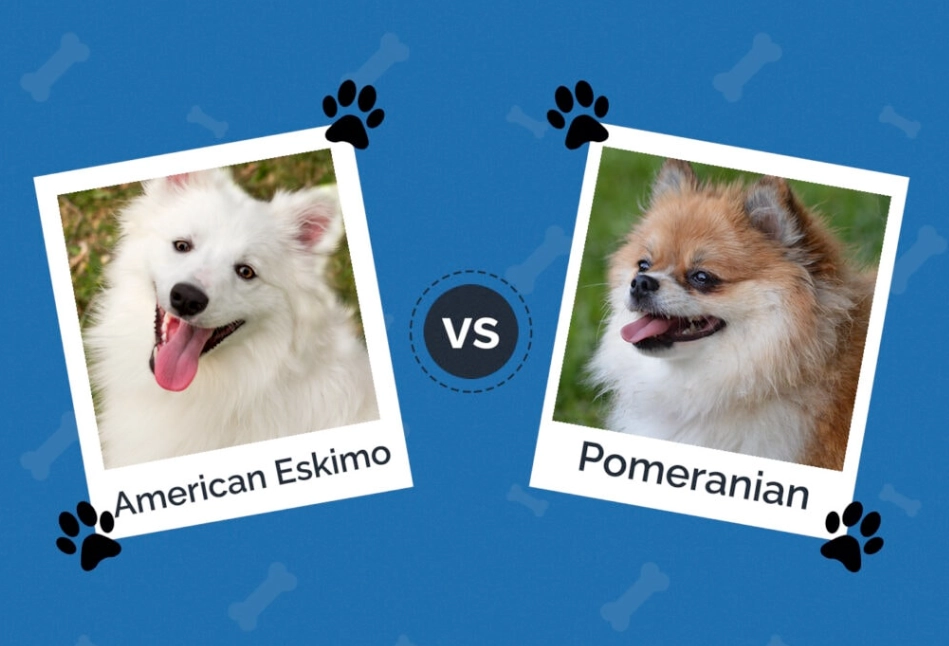
The Temperament Clash: Brainy vs. Sassy
The American Eskimo Dog: The Overachieving Student
The Pomeranian: The Confident Royalty
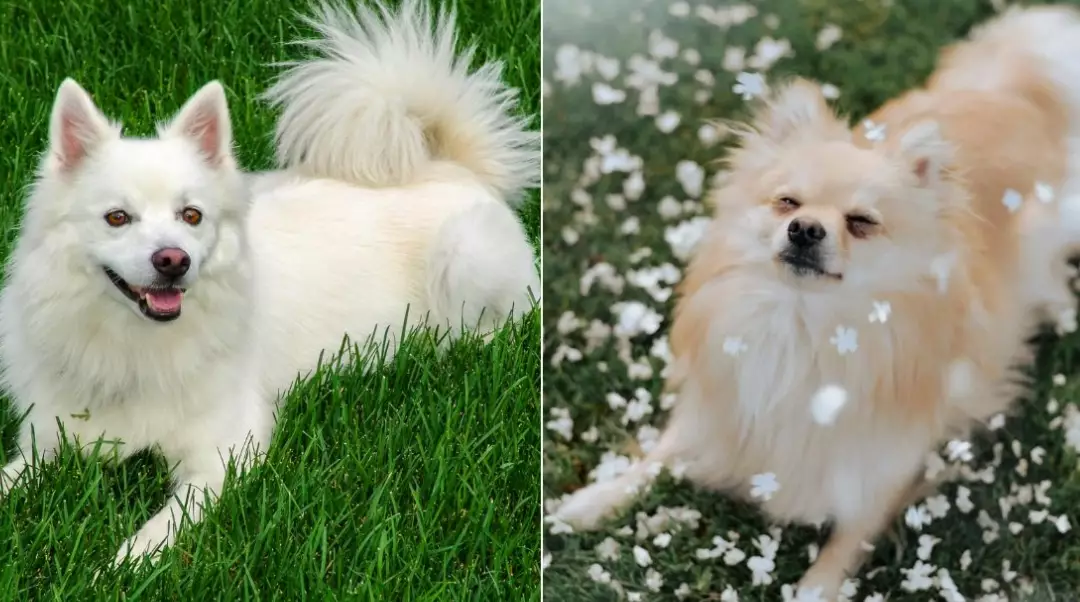
Real-World Living Needs: Exercise, Space & Noise
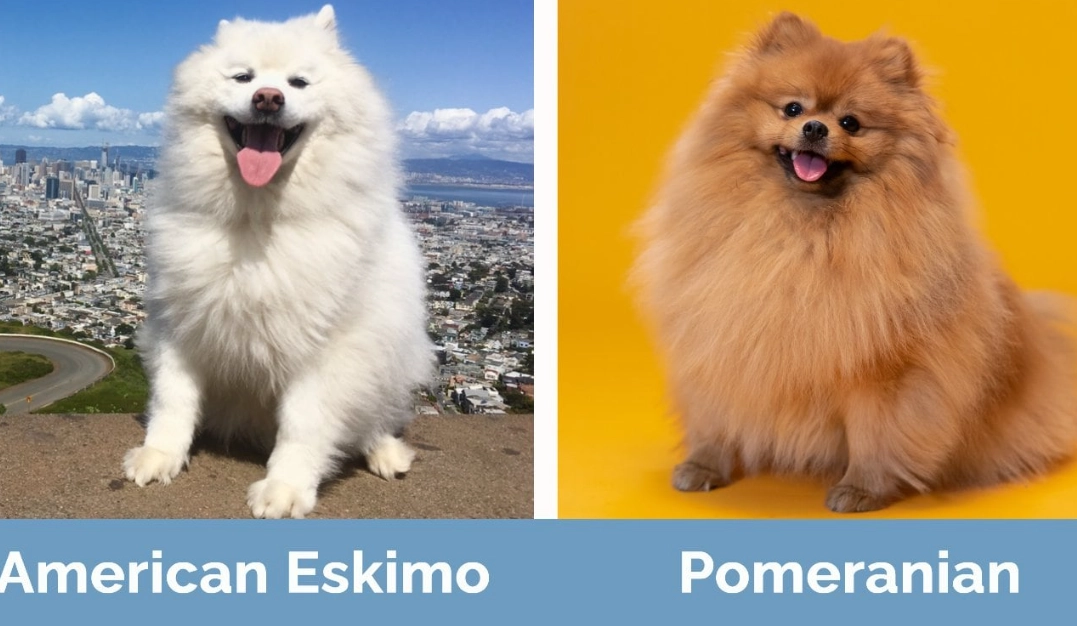
The Grooming Battle: Commitment Levels Compared
Health & Lifespan: What You Need to Plan For
Making Your Choice: Key Decision Factors
Your Questions, Answered
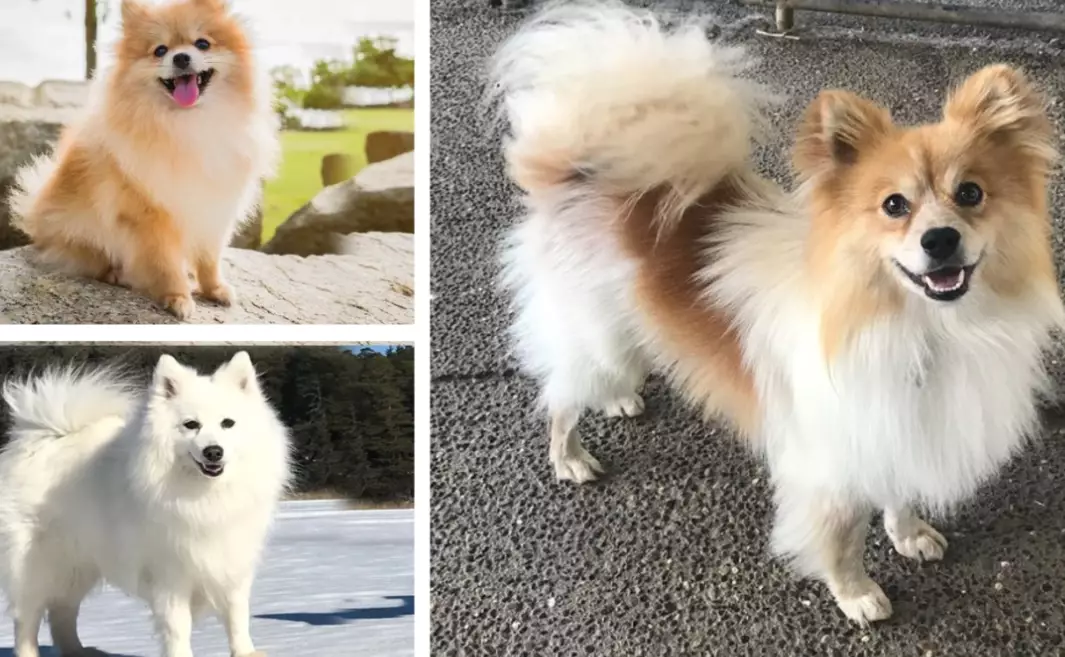 In the end, the "better" dog is the one that fits the life you actually lead, not the one you see in a perfect Instagram photo. The American Eskimo Dog is for the active, structured owner who wants a brilliant and trainable companion. The Pomeranian is for someone who delights in a big personality in a tiny package and has the patience for a confident, sometimes stubborn, little boss. Whichever cloud you choose, be ready for a decade-plus of love, laughter, lint rollers, and a whole lot of brushing.
Personal Observation: I've seen more Pomeranians with "small dog syndrome"—where lack of consistent training leads to snappishness or resource guarding—than American Eskimos. It's not the breed's fault; it's because people often don't train small dogs as seriously as big ones. An untrained Eskie might be destructively bored. An untrained Pom might become a tiny, furry tyrant.
Can an American Eskimo Dog live in an apartment?
Yes, but with a major caveat. An American Eskimo Dog's adaptability to apartment life depends far more on your commitment to daily, vigorous exercise than the square footage of your home. A tired Eskie is a good Eskie. Without sufficient physical and mental stimulation, their intelligence and energy will manifest as destructive chewing or excessive barking. A daily long walk combined with a serious play session (fetch, flirt pole) is non-negotiable, even in a small space. Pomeranians, due to their smaller size and slightly lower exercise needs, are often considered more naturally suited to apartments, but they still require dedicated daily activity.
Which dog breed is easier to train, an American Eskimo or a Pomeranian?
The American Eskimo Dog is generally more responsive to structured training. They are highly intelligent, eager to please, and thrive on clear tasks and positive reinforcement. Think of them as the straight-A student who loves homework. Pomeranians are plenty smart but can be more independent and stubborn. Training a Pom requires immense patience, consistency, and turning lessons into a game. They are sensitive to tone, so harsh methods backfire immediately. The bigger challenge with Pomeranians is often not teaching the command, but overcoming their occasional selective hearing when something more interesting catches their eye.
Are Pomeranians good with young children?
This requires careful management. Pomeranians are fragile. A toddler's accidental fall or overly enthusiastic hug can cause serious injury. Their temperament is also feisty; they may not tolerate clumsy petting and can snap if frightened or hurt. Successful relationships between Poms and young kids are built on constant, vigilant supervision and teaching children how to interact gently. An American Eskimo, being sturdier and typically more patient, is often a better physical match for a family with respectful, older children. However, no dog should ever be left unsupervised with very young kids.
How much does it cost to groom an American Eskimo Dog compared to a Pomeranian?
Expect to pay significantly more for an American Eskimo. A full groom (bath, blow-dry, brush-out, nail trim, sanitary trim) for an Eskie can easily cost $80-$120+ every 4-6 weeks, depending on your location and the dog's size (Toy, Miniature, or Standard). Their dense, double coat takes much longer to properly wash, dry, and detangle. Pomeranian grooming costs are lower, typically in the $50-$80 range for a similar service, due to their smaller size. However, Poms often require more frequent trims (every 3-4 weeks) to maintain a specific "puffy" show look or a manageable pet trim. Both are high-maintenance, but the Eskie's bill is higher per session.
Comment