I've lived with two Aussies over the past decade, and let me tell you, the internet gets it half-right. Yes, they're smart. Yes, they're energetic. But if you stop there, you're setting yourself up for a shock. The Australian Shepherd temperament is a complex, driven, and deeply rewarding package that's absolutely not for everyone. It's less like owning a pet and more like partnering with a furry, four-legged workaholic who's constantly looking for a job. If you're considering one, you need to look past the stunning blue eyes and merle coats and understand what really makes their minds tick.
Quick Navigation: What's Inside This Guide
The Unshakeable Core of an Aussie's Personality
Let's break down the foundational pieces. You can't manage what you don't understand.
| Trait | What It Looks Like | What It Really Means For You |
|---|---|---|
| Boundless Energy | Constant motion, stamina for days, always "on." | Exercise is non-negotiable. A bored Aussie is a destructive Aussie. |
| Razor-Sharp Intelligence | Learns commands fast, solves puzzles, figures out latches. | They need mental challenges. Simple repetition bores them. |
| Strong Herding Instinct | Staring, stalking, circling, heel nipping. | This drive is hardwired. It will surface, often with kids, pets, or bikes. |
| Intense Loyalty & Watchfulness | Velcro dog, always near owner, alert to everything. | Prone to separation anxiety. Can be reserved or wary of strangers. |
| Eagerness to Please | Wants to work with you, responsive to positive training. | Your greatest training asset. They want a job and a leader. |
That table is the textbook version. Here's the lived-in reality.
Energy Level: It's Not Just Exercise, It's a Lifestyle
An Aussie's energy isn't just about needing a long walk. It's a persistent, buzzing current. My first Aussie, Finn, could hike for four hours and still want to play fetch in the yard. The mistake people make is thinking physical exhaustion is enough. It's not. You must drain the mental battery too. A tired body with a restless mind leads to neurotic behaviors: shadow chasing, fence running, obsessive barking.
This isn't a dog you can skip a day with because it's raining. Their need for activity is as regular as your need for coffee.
Intelligence: A Double-Edged Sword
Their smarts are incredible. Finn learned "roll over" in three repetitions. But here's the subtle error few mention: they learn your bad habits and inconsistencies just as fast. If you let them jump on you once when you're in sweats, they've logged that data. If the command "down" sometimes means lie down and sometimes means get off the couch, they'll get confused and make their own rules.
You're not training a dog; you're programming a highly adaptable AI with paws. Clarity and consistency are your best friends.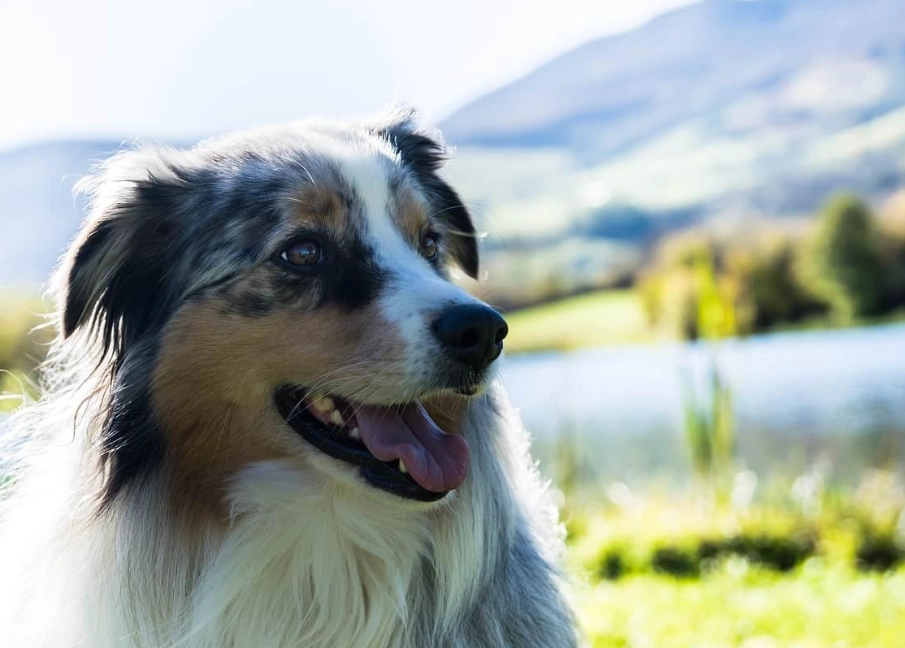
The Herding Drive: It's Not a Bug, It's a Feature
This is the most misunderstood part of the Australian Shepherd temperament. That instinct to control movement isn't something you train out. You manage and redirect it. It manifests in ways people don't expect: the intense stare ("eye") they fix on you or other animals, the tendency to bump your hand with their nose for attention, the way they might circle a group of people in the park.
With kids, this can look like nipping at heels or clothes. It's not aggression; it's the dog saying, "You're moving erratically, and my job is to control this chaos." You have to teach the dog an off-switch and teach the kids calm movement.
How to Actually Live With This Level of Energy
Okay, so you're committed. How do you not just survive, but thrive with an Aussie? It's about routine, variety, and engagement.
Physical Exercise Mix: Don't just do the same walk every day. - High-Intensity Interval Play: 20 minutes of hard fetch or flirt pole work. - Endurance Work: 45+ minute hikes, runs, or bike rides (once fully grown and conditioned). - Swimming: A fantastic low-impact workout that many Aussies love.
Mental Stimulation Is Non-Negotiable: This is where most owners drop the ball. - Training Sessions: 10-15 minutes, 2-3 times a day. Teach new tricks, polish old ones. Work on impulse control ("wait," "leave it"). - Food Puzzles & Snuffle Mats: Make them work for every meal. A bowl of kibble is a missed opportunity. - Nosework: Hide treats around the house or yard. Tapping into their sense of smell is incredibly tiring. - Structured Games: Name their toys and ask for them by name. This builds vocabulary and engagement.
The Importance of an Off-Switch: This is critical. You must teach a "settle" or "place" command. Use a mat or bed, and reward calm behavior there. An Aussie that can't relax is a nightmare. I trained Finn to go to his "spot" when I was preparing dinner. It gave him a job (staying put) and gave me peace.
The Hard Truths: Challenges & Common Misconceptions
Let's get real about the downsides. Glossing over them helps no one.
Separation Anxiety is Common. Their loyalty and need to work with you means they often struggle alone. Crate training from day one is essential. Start with seconds, then minutes, then hours. Never make a big deal about arrivals or departures. For some, even with training, being alone for 8+ hours a day is simply too much. Doggy daycare or a midday walker might be a necessary budget item.
They Can Be Vocal. Barking, whining, "talking." They use their voice to alert you, express frustration, or demand action. If you live in an apartment with thin walls, think twice. Training a quiet "enough" command is a must.
Reserved With Strangers. They are not typically golden-retriever-level greeters. They are often observant and cautious with new people. This is not aggression, but it requires proper, positive socialization from puppyhood to ensure it doesn't tip into fearfulness or reactivity.
The Biggest Misconception: That they are a hyper-active, dumbed-down Border Collie. They're different. According to the Australian Shepherd Club of America, Aussies were bred as all-around ranch dogs—herding, guarding, general companionship. This can make them slightly more adaptable and biddable than some herding breeds, but the core drive is still immense.
Is an Australian Shepherd Temperament Right for Your Family?
Let's run through some common scenarios.
With Young Children: Possible, but with major caveats. The dog must be well-trained, the children must be taught to respect the dog (no tail pulling, no screaming/running games that trigger herding), and constant supervision is required. An Aussie is not a nanny dog; it's a working dog that will try to manage chaotic little humans.
With Other Pets: They often do well with other dogs, especially if raised together. Their herding instinct can be an issue with cats or small pets. Early, positive exposure is key. Some Aussies will never be safe with pet rabbits or birds—the prey drive can be strong.
For First-Time Dog Owners: I generally advise against it. The combination of high physical needs, high mental needs, and strong instincts is a lot to handle. You're learning basic dog ownership while trying to manage an advanced-degree candidate. It's like learning to drive in a Formula 1 car.
Apartment Living: It's a huge challenge. It can work if you are a marathon runner or avid hiker who will commit to multiple, long outings every single day. Without immediate yard access, the burden of providing sufficient exercise falls entirely on scheduled trips outside. One missed day can lead to disaster.
Your Burning Questions Answered
Is an Australian Shepherd's temperament good with small children?
It depends heavily on the dog's training and the children's behavior. A well-socialized Aussie raised with respectful kids can be incredibly loyal and gentle. However, their strong herding instinct can manifest as nipping at heels or bumping to 'herd' running, noisy children, which can be frightening. Supervision is non-negotiable, and you must teach both the dog and the children appropriate boundaries from day one.
How much daily exercise does an Australian Shepherd temperament really need?
Forget the generic 'one hour a day' advice. For a mentally stable Aussie, think in terms of a job, not just exercise. This means 60-90 minutes of vigorous physical activity (running, hiking, fetch) PLUS 30-45 minutes of dedicated mental training (obedience, trick training, puzzle toys) daily. A simple walk is not enough; it's the combination of physical exhaustion and mental satisfaction that prevents destructive behaviors.
Can an Australian Shepherd's temperament adapt to apartment living?
It's one of the biggest challenges for this breed. An Aussie can live in an apartment, but it requires an owner with an athletic lifestyle and a commitment that borders on obsessive. You must replace the lack of a yard with multiple, structured outings. Without immediate outdoor access, boredom and pent-up energy can lead to incessant barking, chewing, and anxiety. It's far from ideal and works only for the most dedicated, active owners.
Why does my Australian Shepherd chase bikes and cars?
This is a classic expression of their hardwired herding drive. Moving wheels trigger the same instinct as moving livestock. It's not aggression; it's an impulse to control the movement. This behavior is self-rewarding and dangerous, so it must be managed proactively. Start with impulse control training in low-distraction environments and use positive reinforcement to create a strong 'watch me' or 'leave it' command before the behavior becomes a habit near roads.
 In the end, the Australian Shepherd temperament is a masterpiece of selective breeding for work and partnership. They are not decorative pets. They are thinkers, doers, and loyal shadows. If you can match their energy, engage their mind, and provide clear leadership, you'll have a companion of unparalleled devotion and capability. If you can't, you'll both be miserable. Look past the fluff and be brutally honest about your lifestyle. The right match makes all the difference.
Reader Comments