Let's cut straight to the chase. Is an American Staffordshire Terrier a pitbull? The short, frustrating answer is: it depends on who you ask. Ask a dog show judge or a breed purist, and they'll give a firm "no." Ask your insurance company, your landlord, or a local news report about a dog attack, and the answer is almost always a resounding "yes." This disconnect isn't just semantic trivia—it affects where people can live, what they pay for insurance, and even whether their beloved pet is legally allowed to exist in their community.
I've been involved with bully breeds for over a decade, first through rescue, then through responsible breeding of American Staffordshire Terriers. The amount of misinformation I've had to correct, from well-meaning friends to hostile lawmakers, is staggering. The confusion stems from a tangled web of history, semantics, and genetics.
What You'll Find in This Guide
The Shared History & The Great Split
To understand the present, you have to dig into the past. Both the American Staffordshire Terrier (AmStaff) and the dog most commonly referred to as the "pitbull"—the American Pit Bull Terrier (APBT)—share a common ancestor in 19th-century England. These dogs were a blend of old Bulldogs and terriers, bred for the brutal "sport" of bull-baiting and, later, dogfighting.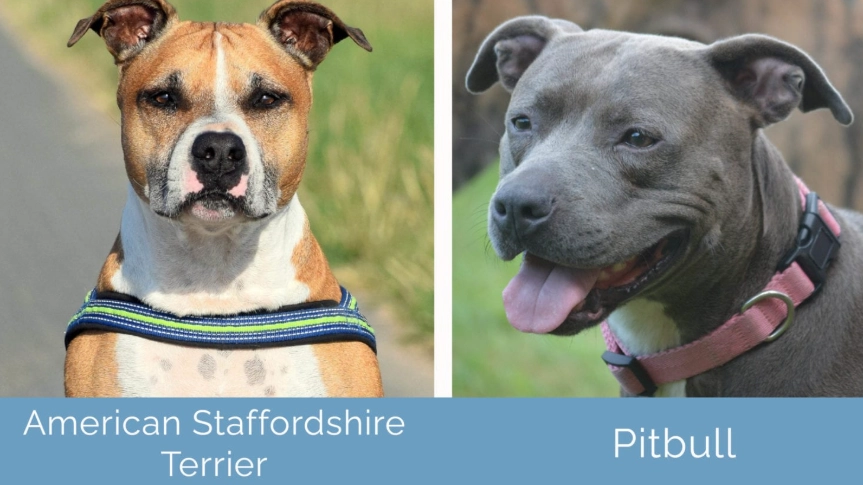
When these dogs came to America, they were put to work on farms as all-purpose catch dogs, hunting companions, and family guardians. Breeders started selecting for slightly different traits. This is where the paths began to diverge.
Key Historical Fork: In the early 20th century, enthusiasts wanted recognition from the official American Kennel Club (AKC). The AKC, wanting distance from the "pit fighting" connotation, refused to register dogs as "Pit Bull Terriers." So, in 1936, they accepted the breed under a new name: Staffordshire Terrier (changed to American Staffordshire Terrier in 1972). The breeders who stayed focused on the original working type continued to register their dogs as American Pit Bull Terriers with the United Kennel Club (UKC), founded in 1898, which had no issue with the name.
Think of it like two cousins from the same family. One (the AmStaff) went to finishing school, got a polished look, and stuck to a strict rulebook for appearance. The other (the APBT) stayed closer to its working-class roots, valued more for athleticism and drive than a perfect head shape. They're undeniably related, but they've been formally separate for nearly a century.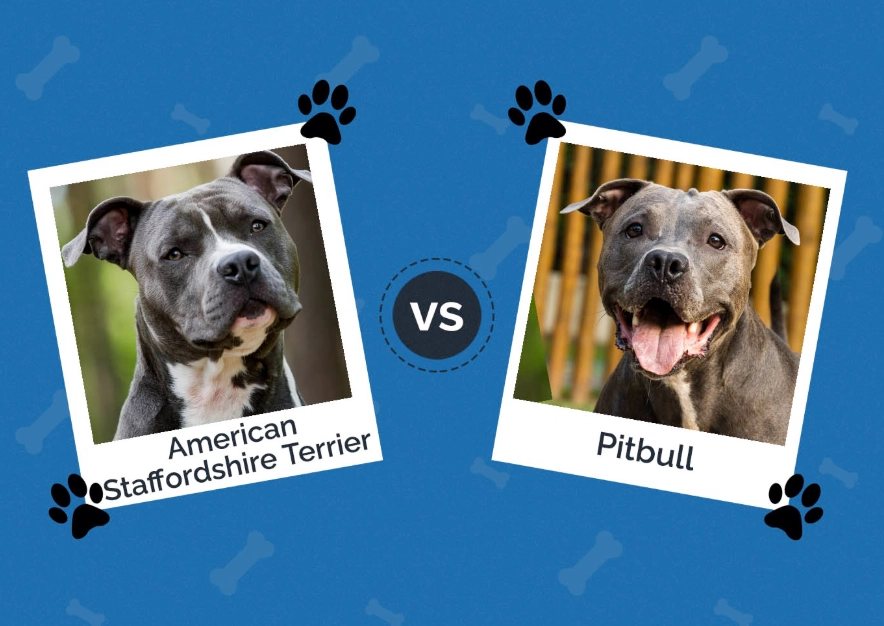
Official Breed Standards: AmStaff vs. "Pitbull"
This is where the "they're the same dog" argument falls apart for anyone who actually works with breeds. The AKC and UKC write detailed "breed standards"—blueprints that describe the ideal specimen.
Here’s the breakdown. It’s subtle but significant.
| Feature | American Staffordshire Terrier (AKC) | American Pit Bull Terrier (UKC) |
|---|---|---|
| General Impression | Should give the impression of great strength for its size; a smoothly muscled, stocky dog. | Strength, confidence, and zest for life. Medium-sized, solidly built, short-coated. |
| Size & Weight | Height: 17-19 inches (female), 18-19 inches (male). Weight is proportional to height, but often 40-70 lbs. The standard emphasizes balance over sheer size. | No specific height/weight in standard. Focus is on proportion. In practice, they are often slightly leaner and can vary more widely than AmStaffs. |
| Head & "Cheekiness" | Head is medium length, deep through. Distinct stop. Cheek muscles are very pronounced. The AKC standard specifically calls for "very pronounced" cheek muscles. | Head is medium length, blocky. Clearly defined stop. Cheek muscles are well-defined, but the standard doesn't emphasize "very pronounced" to the same degree. |
| Nose & Color | Nose is always black. Many colors allowed, but >80% white, black & tan, or liver are not preferred. | Nose color may be any color. All colors and patterns are acceptable except merle. No disqualification for color. |
| Registration | American Kennel Club (AKC). A dog cannot be dual-registered as both an AKC AmStaff and a UKC APBT. | United Kennel Club (UKC). Also registered with the ADBA (American Dog Breeders Association), which focuses on the performance line. |
Notice the nuances? The AmStaff standard pushes for a more consistent, "bulkier" look, especially in the head. The APBT standard is broader, allowing more variation. An expert can often spot the difference. To the average person—or a housing inspector—they look identical.
The "Pitbull" Umbrella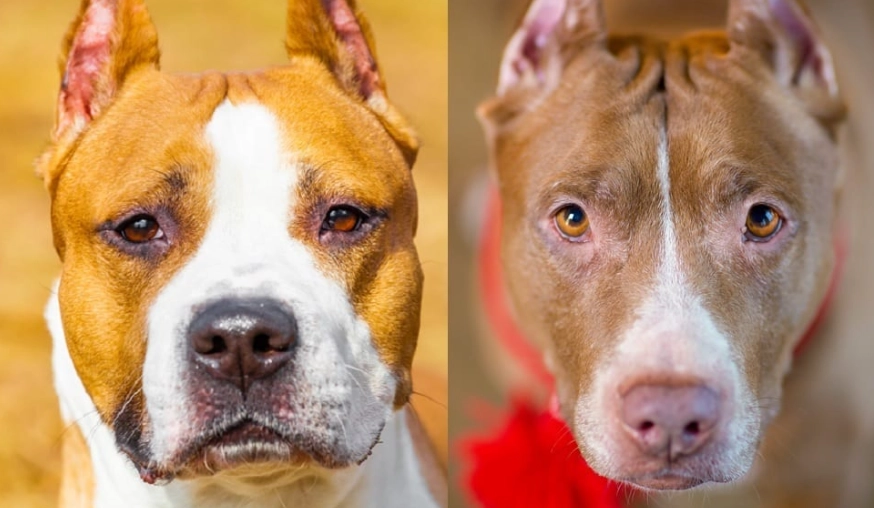
Here’s the real kicker. In common parlance, law, and media, "pitbull" is not a breed. It's a category. It typically includes:
- American Staffordshire Terrier
- American Pit Bull Terrier
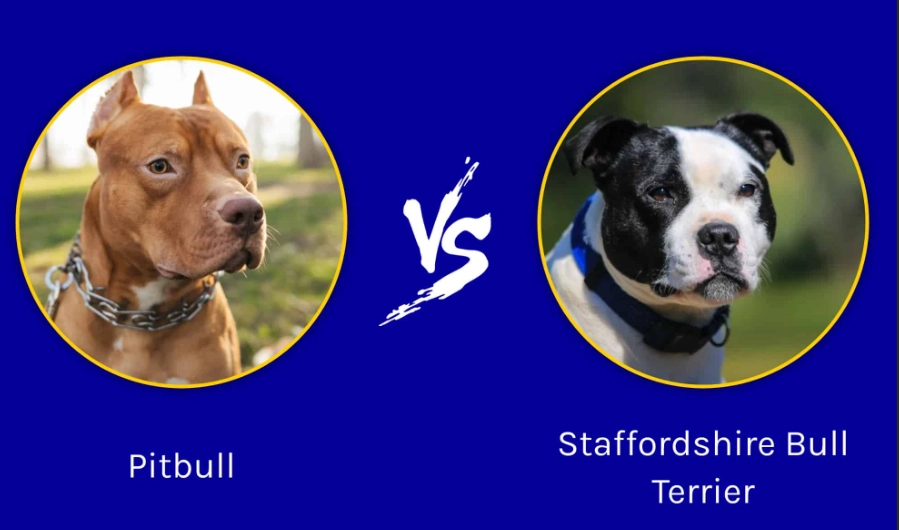
- Staffordshire Bull Terrier (a smaller, distinct UK breed)
- American Bulldog (sometimes)
- Any mixed-breed dog with a blocky head and short coat.
This is why the question "Is an AmStaff a pitbull?" has two answers. Genetically and by breed club standards, they are distinct. In the real world where breed-specific legislation (BSL) exists, they are almost always lumped together.
Why the Label Matters: Insurance, Bans & Everyday Life
This isn't an academic debate. I've seen friends get eviction notices. I've spent hours on the phone arguing with insurance agents. The label has teeth.
The Insurance Problem: Many homeowner's and renter's insurance companies have "restricted breed" lists. "Pitbull" is almost always on it. Even with AKC papers proving your dog is an American Staffordshire Terrier, most insurers will not care about the distinction. You'll be denied coverage or have to pay exorbitant premiums. Companies like State Farm and USAA that use "dog bite history" rather than breed are exceptions, but you must ask directly.
Housing: Landlords, especially large management companies, frequently ban "pitbulls." Showing them the AKC paperwork might work with a small-time landlord who's reasonable. For a corporate policy, it's usually useless. Their lease defines the term, and it's always broad.
Breed-Specific Legislation (BSL): This is the most severe consequence. Cities or counties enact laws that restrict or ban ownership of "pitbulls." These laws are notoriously vague, often defining them by physical characteristics (e.g., "a dog with a broad head and muscular body"). In these jurisdictions, your AmStaff is a pitbull, full stop. You may face muzzling in public, mandatory sterilization, expensive liability insurance, or confiscation of your dog.
A friend of mine moved cities for a job. She didn't check the local ordinances. Her sweet, therapy-certified AmStaff was considered a "pitbull" under the city's vague ordinance. She had 30 days to rehome him or move again. She moved.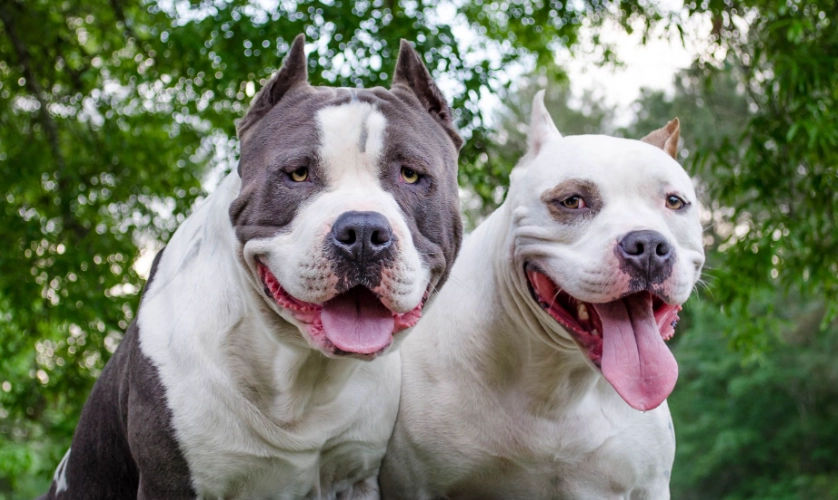
Is Your Dog an AmStaff, an APBT, or a Mix?
Most people don't get their dog from a show breeder with a five-generation pedigree. Shelters are full of wonderful dogs labeled "pitbull mix." What's really in there?
Visual Identification is Flawed: Studies, like one published in The Veterinary Journal, have shown that even animal shelter workers misidentify dog breeds visually over 75% of the time when compared to DNA results. A dog that looks like a classic "pitbull" could be a mix of Boxer, Bulldog, and Labrador.
The DNA Test Answer: If you're curious, companies like Embark and Wisdom Panel can tell you. You might discover your "AmStaff mix" is actually mostly American Pit Bull Terrier, or has no bully breed at all. This knowledge is powerful. If your city's law bans "American Pit Bull Terriers" but not "American Staffordshire Terriers," a DNA test saying your dog is an AmStaff mix could be a legal lifeline.
For the average owner, the specific breed label matters less than understanding your individual dog's needs. But knowing the history helps explain why they are the way they are—tenacious, people-oriented, energetic.
What It's Really Like to Own an American Staffordshire Terrier
Forget the hype. Let's talk reality. If you're considering an AmStaff, you're not getting a generic dog.
Temperament: The AKC standard describes them as "keenly alive to his surroundings." That's a fancy way of saying they're intense, smart, and bond fiercely to their people. They are not guard dogs in the aloof, suspicious sense. They are more likely to lick an intruder to death after bringing them a toy. However, their strength and determination mean poor training or socialization has serious consequences.
The Non-Negotiables:
- Socialization: This isn't optional. From week 10 onward, they need positive exposure to every sight, sound, person, and safe dog you can manage. Dog selectivity (not liking every dog they meet) is common as they mature, and that's okay. You must manage it.
- Training: They are powerful. A solid recall, loose-leash walking, and a solid "leave it" are safety commands, not party tricks. Use positive reinforcement. They are sensitive and shut down with harsh methods.
- Exercise & Brain Work: A bored AmStaff is a destructive AmStaff. They need daily physical and mental exercise. Nose work, flirt poles, agility, advanced obedience—find what they love.
- Health: Generally robust, but prone to allergies, hip dysplasia, and a heart condition called hereditary cataracts. A responsible breeder will test for these.
They are not the dog for a first-time owner who wants a low-maintenance pet. They are the dog for someone who wants a project, a partner, and a profound connection with an animal that will stare into your soul.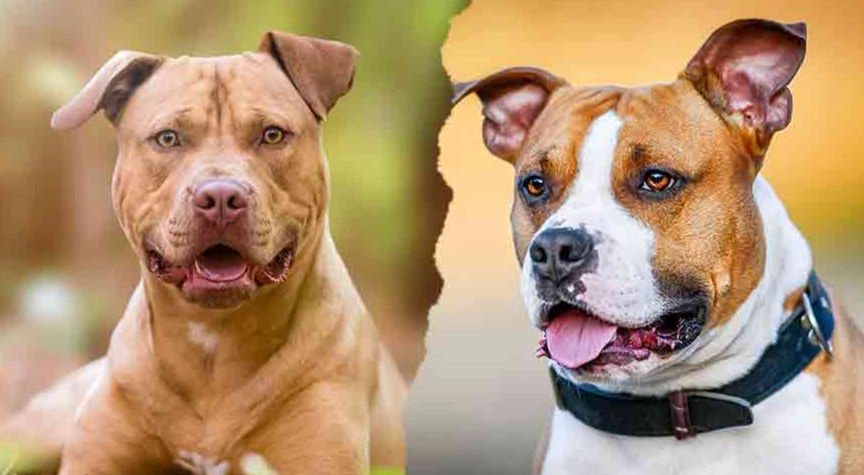
Your Top Questions Answered (FAQs)
Will my American Staffordshire Terrier be flagged as a pitbull by insurance companies?
Unfortunately, it's highly likely. Most insurance companies use visual identification or a broad list of restricted breeds that includes "pitbull-type" dogs. Your AmStaff, despite its AKC papers, often falls under this blanket term. You'll need to shop for companies with breed-neutral policies or those that evaluate dogs on an individual basis, which can be more expensive. Always disclose your dog's breed upfront to avoid policy cancellation later.
How can I prove my dog is an AmStaff and not a pitbull if animal control questions me?
Your first and strongest line of defense is official registration paperwork from the American Kennel Club (AKC) or United Kennel Club (UKC). Keep digital and physical copies. Next, gather pedigree documents. While not as definitive for officials, having photos and videos that showcase your dog's temperament in various settings (dog-friendly cafes, parks, training class graduations) can help build a case for it being a well-adjusted individual, regardless of label. Know your local ordinance's specific wording.
I adopted a mixed-breed dog from a shelter labeled "pitbull mix." Could it have AmStaff in it?
Absolutely, and it's very common. Shelters often use "pitbull" as a catch-all for any blocky-headed, short-coated dog. Your dog could be pure AmStaff, a mix of AmStaff and another bully breed, or have no bully breed DNA at all. The only way to know is through a reliable dog DNA test like Embark or Wisdom Panel. These tests can identify American Staffordshire Terrier DNA specifically, which can be helpful for your own knowledge and for challenging restrictive housing policies that only ban "pitbulls" but list AmStaffs separately.
 Are American Staffordshire Terriers inherently more dangerous than other breeds?
Breed alone is not a reliable predictor of aggression. The American Veterinary Medical Association (AVMA) states that controlled studies have not identified pitbull-type dogs as disproportionately dangerous. Temperament is shaped by genetics, early socialization, training, owner responsibility, and individual history. An AmStaff from responsible lines, properly socialized and trained, is a stable companion. The danger lies in powerful dogs of any breed being placed in the hands of irresponsible owners who seek or encourage aggression. Judge the dog in front of you, not the label.
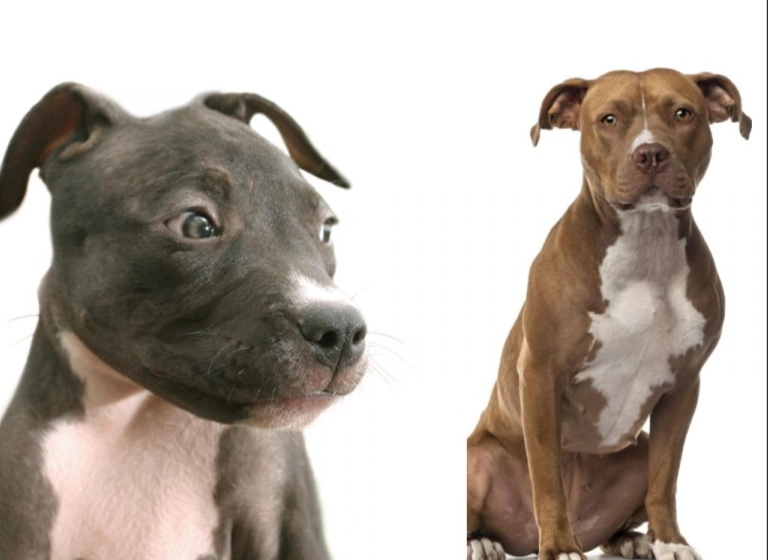 So, is an American Staffordshire Terrier a pitbull? On paper, no. In the eyes of the law and society, frequently yes. Owning one means embracing both realities: the pride in a distinct, historic breed and the responsibility of navigating a world that often fears what it doesn't understand. Your job is to be the best ambassador your dog could have, with papers in one hand and a bag of training treats in the other.
Reader Comments