If you've ever found yourself squinting at two muscular, smiling dogs and wondering if you're looking at a Staffordshire Terrier or an American Staffordshire Terrier, you're not alone. It's one of the most common mix-ups in the dog world. Here's the core answer upfront: they are two distinct breeds, separated by an ocean, different breeding goals, and official kennel club standards. The Staffordshire Bull Terrier (the one from England) is a compact, agile fireplug of a dog. The American Staffordshire Terrier (the one from the US) is its larger, more powerfully built cousin. But the real story is in the details—details that matter deeply when you're choosing a family member.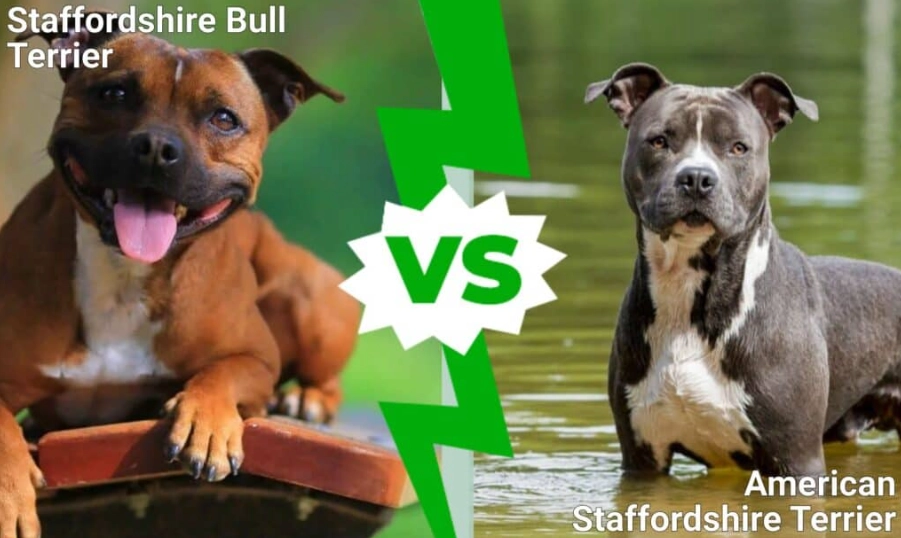
What You'll Learn
A Shared (and Murky) History
To understand the difference, you have to start in 19th-century England. Both breeds share ancestry in the now-extinct Bulldog and various terrier crosses, originally developed for the brutal "sport" of bull-baiting and, later, dog fighting. When animal blood sports were outlawed in 1835, these dogs found a new role as loyal companions for working-class families.
The smaller, agile dogs that were particularly popular in the Staffordshire region were eventually standardized as the Staffordshire Bull Terrier. The Kennel Club (UK) recognized them in 1935, cementing their status as a defined breed.
Meanwhile, some of these "bull-and-terrier" dogs crossed the Atlantic with immigrants. In America, breeders selectively developed a larger, heavier-boned dog. For decades, they were known by many names—Pit Bull Terrier, Yankee Terrier. The American Kennel Club (AKC) finally recognized them in 1936 as the Staffordshire Terrier, adding "American" in 1972 to distinguish them from their British kin. The United Kennel Club (UKC), however, had already recognized the American Pit Bull Terrier as a separate breed decades earlier, which is a primary source of the modern public confusion.
A Side-by-Side Look: Size and Build
This is where the distinction becomes crystal clear. Put them next to each other, and it's obvious.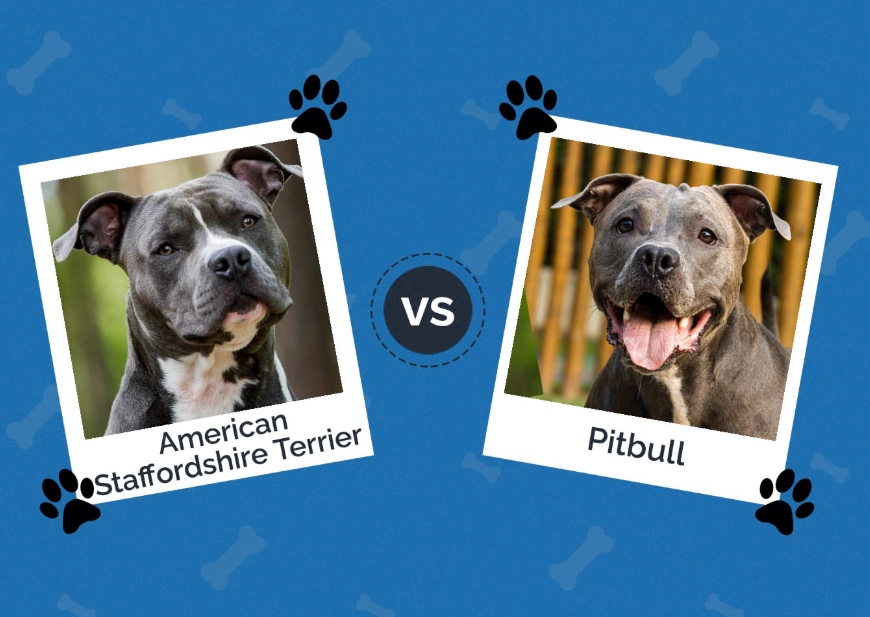
| Feature | Staffordshire Bull Terrier | American Staffordshire Terrier |
|---|---|---|
| Height (at shoulder) | 14-16 inches (36-41 cm) | 17-19 inches (43-48 cm) |
| General Build | Compact, muscular, "broad for size." Agile and "like a little athlete." | Powerfully built, stocky, substantial bone. Conveys great strength for size. |
| Head | Short, deep through, distinct stop. Cheek muscles very pronounced. | Medium length, broad skull, pronounced cheek muscles, distinct stop. |
| Chest | Deep, broad, muscular. A defining feature. | Deep, broad, with well-sprung ribs. Noticeably wide. |
| AKC Breed Standard | AKC Staffordshire Bull Terrier Standard | AKC American Staffordshire Terrier Standard |
The AmStaff isn't just a scaled-up Staffy. The proportions differ. An AmStaff has a slightly longer leg in proportion to its body and a head that, while broad, is less "bullet-like" than the Staffy's. I've always thought a fit Staffy looks like a wrestler, dense and ready to pivot. A fit AmStaff looks more like a linebacker—powerful and grounded.
Personality Beyond the Myths
Now, let's tackle the temperament, because this is where both breeds are most unfairly judged and where subtle, crucial differences lie.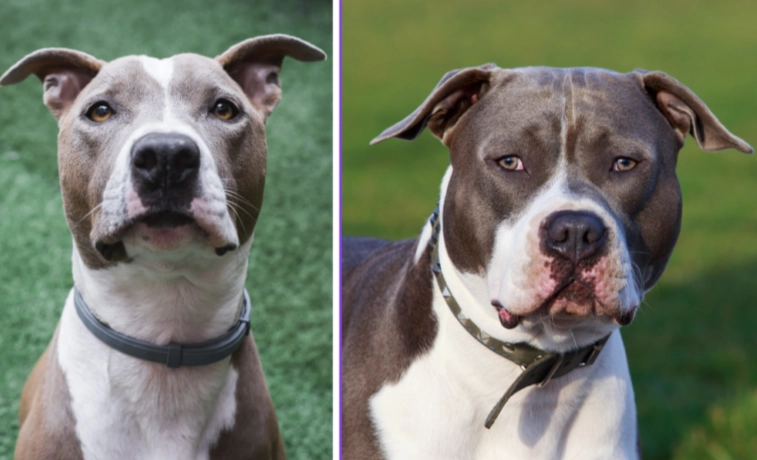
Both breeds are, by standard, affectionate, loyal, and people-oriented. They are not kennel dogs; they thrive on human companionship. The Staffordshire Bull Terrier is famously known in the UK as the "nanny dog" for its noted fondness for children. The AmStaff standard calls for a dog that is "keenly alive to its surroundings" and a "stable, reliable companion."
Staffordshire Bull Terrier Temperament
They are often described as having a "heart of gold." They tend to be exuberant, comical, and incredibly tenacious. Their energy is like a coiled spring—intense bursts of play followed by deep snores on the couch. A common mistake people make is underestimating their strength and drive because of their size. They can be stubborn.
American Staffordshire Terrier Temperament
AmStaffs project a more dignified, confident calmness when mature. They are still playful, but their energy is often more sustained and less "frantic" than a Staffy's puppy-like zeal. They are profoundly loyal and can be reserved with strangers, making early socialization non-negotiable. Their size and power mean their actions have more impact, so a rock-solid temperament is paramount.
Here's a non-consensus point from years of observation: Dog selectivity or same-sex aggression is a potential in both breeds, but it manifests differently. With Staffies, it can sometimes come across as a scrappy, terrier-like reactivity. With AmStaffs, due to their power, it's a more serious management issue. This isn't a guarantee in every dog, but it's a tendency responsible breeders work to mitigate and owners must be prepared for.
Health and Lifespan Considerations
Both are generally robust breeds, but they have some shared and some distinct concerns.
Staffordshire Bull Terriers typically live 12-14 years. They are prone to:
- L-2-HGA and Hereditary Cataracts (both testable via DNA; never buy from a breeder who doesn't test for these).
- Skin allergies, which can be a frustrating and ongoing management issue.
- Patellar luxation (slipping kneecaps).
American Staffordshire Terriers have a lifespan of 12-16 years. Key health screenings include:
- Hip Dysplasia (OFA or PennHIP certification is a must for breeding stock).
- Heart conditions, particularly aortic stenosis.
- Thyroid issues (hypothyroidism).
For both, the biggest health risk is an irresponsible breeder. A reputable breeder will openly share Orthopedic Foundation for Animals (OFA) or other health screening results for the parents.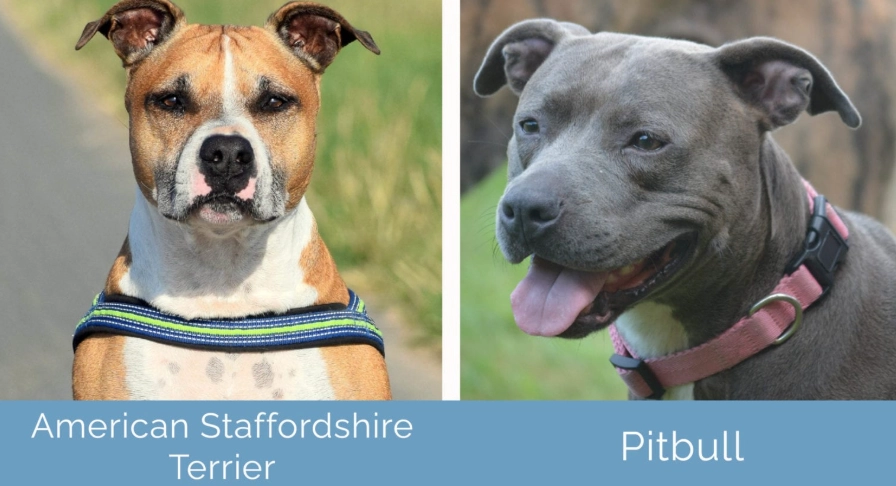
The Non-Negotiables: Training and Socialization
You cannot own either of these breeds casually. Their strength, intelligence, and public perception demand proactive ownership.
Socialization is not just puppy class. It's a continuous process of exposing your dog positively to the world: different people, sights, sounds, surfaces, and safe dog interactions. The goal is a confident, neutral dog, not necessarily a dog park social butterfly. In fact, many experienced owners of these breeds avoid dog parks due to the unpredictable behavior of other dogs and the potential for conflict.
Training must be consistent, positive, and based on mutual respect. They are sensitive dogs that do not respond well to harsh methods. Use their food motivation to your advantage. Focus on rock-solid basics: recall, loose-leash walking (a challenge given their strength), and a solid "leave it."
The AmStaff, due to its size, often requires more formal training to instill impulse control. The Staffy's challenge is often their stubborn streak; you need to be more interesting than whatever they're fixated on.
Which Breed is Right for Your Home? A Real-World Scenario
Let's make this practical. Imagine a young family in a suburban house with a fenced yard and two elementary-school kids.
If they are first-time dog owners or want a slightly more manageable size, the Staffordshire Bull Terrier might be the better fit. Their exercise needs, while real, are easier to meet with family play sessions and daily walks. Their "clownish" nature often meshes well with kids. The parents must still be leaders and socialize relentlessly.
If the family has experience with strong, powerful breeds and is looking for a more imposing but calm guardian presence, the American Staffordshire Terrier could work. They need more structured exercise (jogging, hiking, advanced training) to stay balanced. Every interaction with the children must be supervised, not because the dog is inherently dangerous, but because an accidental bump from 50-70 lbs of muscle can knock a child over. This breed requires a confident, committed owner who understands the weight of responsibility.
For apartment dwellers, the Staffy often adapts better purely due to size, but both can live in apartments if their physical and mental exercise needs are rigorously met. The bigger issue might be breed restrictions from landlords or insurance companies, which unfortunately often target both.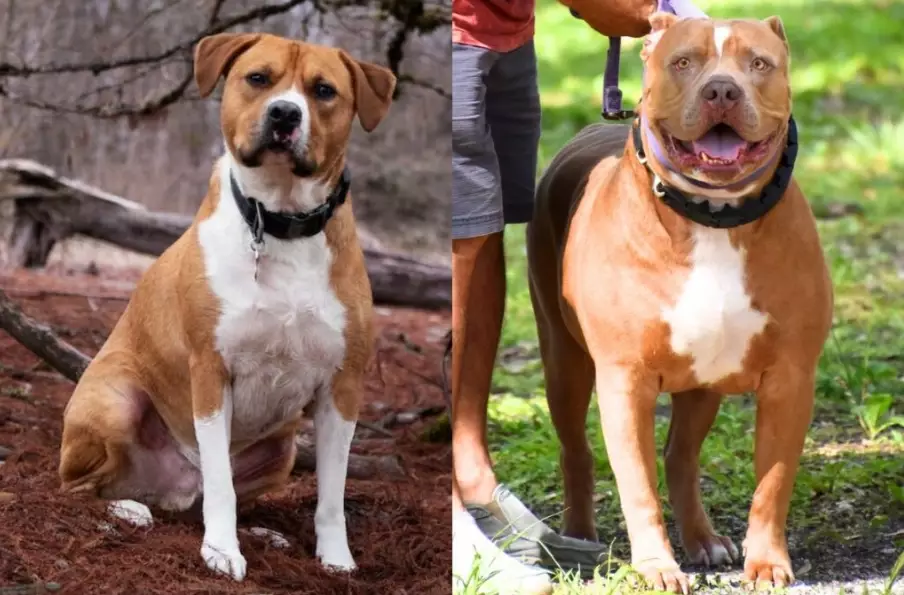
Your Questions, Answered
Which breed is better for a first-time dog owner, the Staffordshire Bull Terrier or the American Staffordshire Terrier?
The Staffordshire Bull Terrier is often considered more suitable for novice owners. They are generally smaller, have slightly lower exercise demands that are easier to manage in an urban setting, and their 'nanny dog' reputation for patience with children, while requiring supervision, points to a predictable and stable temperament when well-bred and socialized. The AmStaff, being larger and more powerful, requires an owner confident in handling a strong dog and committed to consistent, firm (but positive) training from day one.
Are American Staffordshire Terriers and Pit Bulls the same breed?
No, they are distinct breeds according to kennel clubs like the AKC, but the lines are historically blurred. The American Pit Bull Terrier (APBT) is recognized by the United Kennel Club (UKC) but not the AKC. Many AmStaffs were originally dual-registered as APBTs. Today, a key distinction is purpose and standardization: AmStaffs are bred to a strict conformation standard for the show ring, while APBTs in working lines are still bred with a focus on performance traits. In public perception and under breed-specific legislation (BSL), they are often incorrectly grouped together.
Can a Staffordshire Bull Terrier live comfortably in an apartment?
Yes, a Staffordshire Bull Terrier can be an excellent apartment dog, often more so than an AmStaff. Their compact size is a major advantage. The crucial factor is meeting their mental and physical exercise needs. A daily brisk walk of 30-45 minutes, coupled with 15-20 minutes of active play (fetch, tug) and training sessions indoors, is usually sufficient. They are indoor companions who thrive on being with their people. The challenge is their tendency to snore loudly—something future neighbors might appreciate a heads-up about!
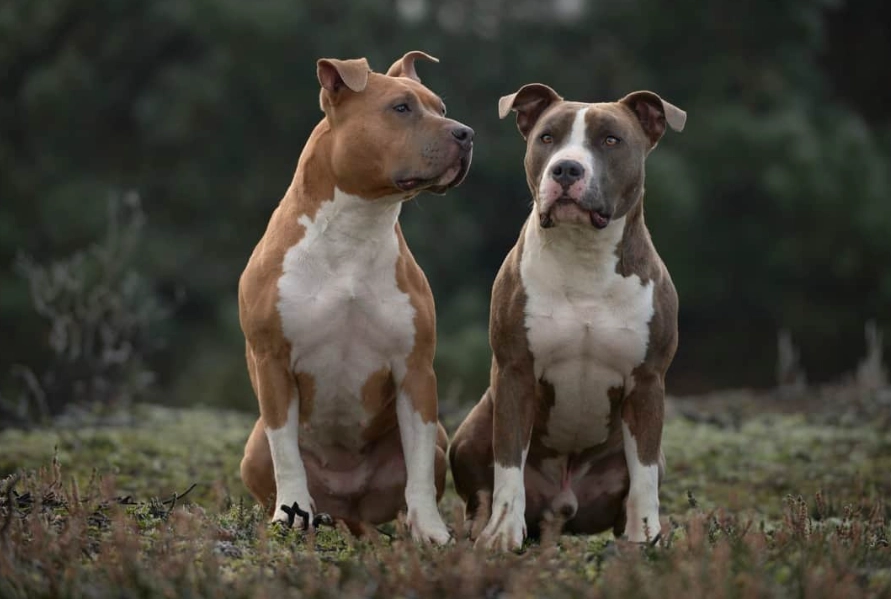 Choosing between a Staffordshire Bull Terrier and an American Staffordshire Terrier isn't about which is "better." It's about which is a better fit for your lifestyle, experience, and home. The Staffy is the compact, effusive charmer. The AmStaff is the powerful, dignified guardian. Both will reward dedicated ownership with unparalleled loyalty and affection. Do your homework, find a reputable breeder who prioritizes health and temperament, or consider a breed-specific rescue. Whichever you choose, you're gaining a piece of living history and a friend who will leave giant paw prints on your heart.
Reader Comments