If you're looking for a quick answer, here it is: the American Staffordshire Terrier was developed primarily from crosses between the Old English Bulldog and various terrier breeds (most likely the now-extinct Black and Tan Terrier and early Fox Terriers). But that simple formula—Bulldog + Terrier—doesn't even begin to tell the whole story. It's like saying a cake is just flour and eggs. The magic, the controversy, and the true nature of the AmStaff lie in the why and how of that mix, and what breeders have done with it since.
I've spent years around these dogs, from show rings to rescue events, and the most common misconception is that they're just generic "pit bulls." Understanding their specific genetic recipe is the first step to seeing them as the distinct, complex breed they are.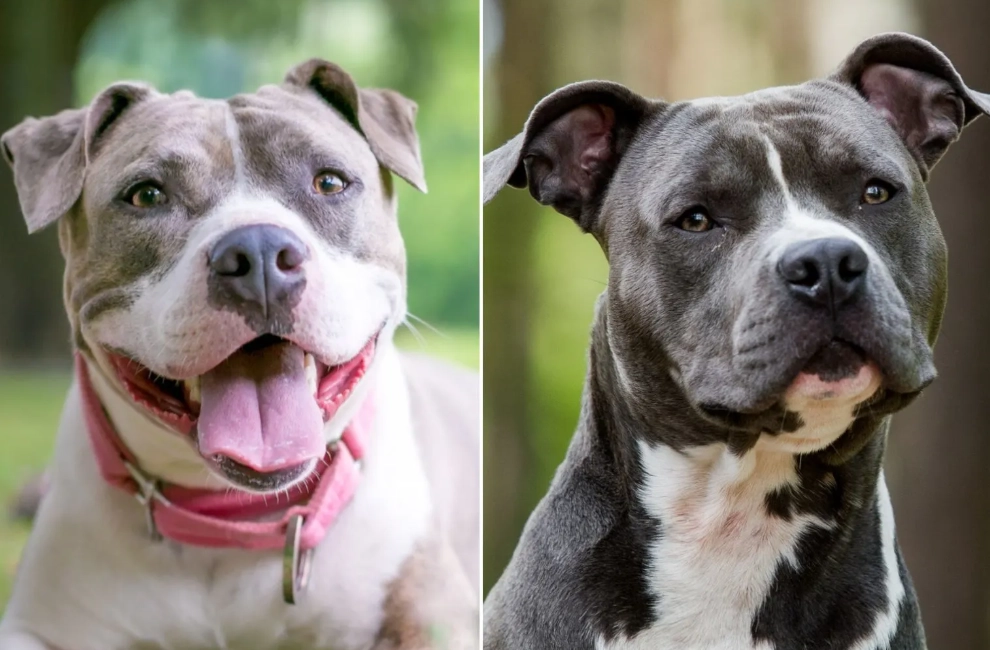
What's Inside This Guide
What Exactly is an American Staffordshire Terrier?
Today's American Staffordshire Terrier is a muscular, stocky, and surprisingly agile dog. The American Kennel Club (AKC) standard describes them as confident, smart, and good-natured. They're strong for their size—a sort of canine powerhouse wrapped in a short, glossy coat that comes in many colors.
But to get why they are the way they are, you have to rewind to industrial England. We're not talking about modern Bulldogs or Terriers. The components were different.
The Two Breeds in Detail: A 19th-Century Recipe
Let's break down what each founding group brought to the table. This wasn't a one-time mix; it was a deliberate, multi-generational blending project.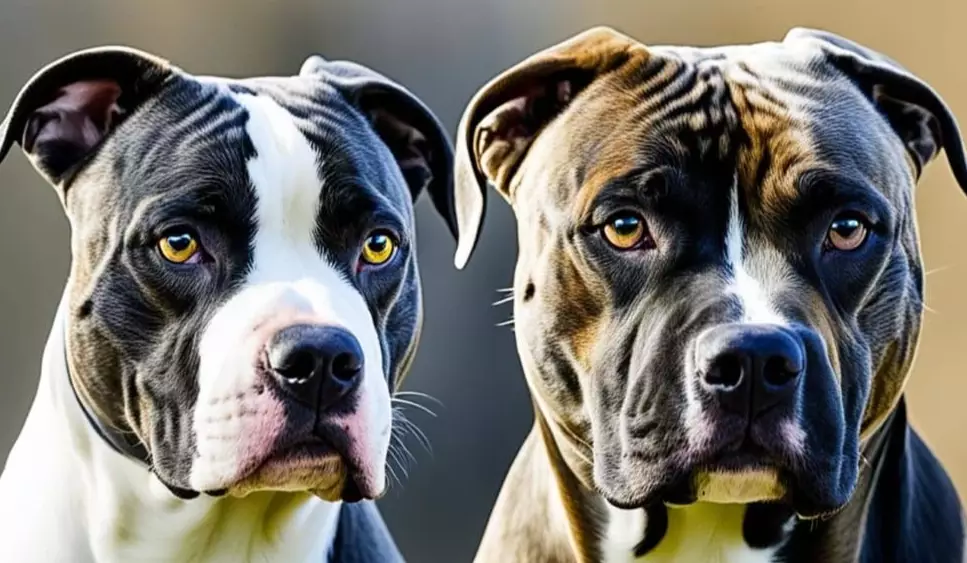
The Bulldog Contribution: Strength and Tenacity
The Old English Bulldog was the muscle. Think less couch potato, more rugged athlete. From this ancestor, the AmStaff inherited its powerful jaw structure, broad chest, incredible pain tolerance, and a certain fearless determination. When bull-baiting was outlawed in 1835, some breeders shifted their focus to dog-on-dog contests. The Bulldog had strength but lacked the lightning speed and frenzy desired for this new, grim arena.
That's where the terrier came in.
The Terrier Contribution: Agility and "Gameness"
Terriers were the spark. Breeds like the Black and Tan Terrier (an ancestor of the Manchester Terrier) and early Fox Terriers were vermin hunters—feisty, quick, and relentless. By crossing them with Bulldogs, breeders aimed to create a dog that combined the Bulldog's power and courage with the Terrier's speed, agility, and high-pitched drive. This hybrid became known by many names: Pit Dog, Bull-and-Terrier, and later, the Staffordshire Bull Terrier in England.
Immigrants brought these Bull-and-Terrier dogs to America in the late 1800s. Here, breeders selectively developed a slightly larger, heavier-boned version, which was eventually recognized by the AKC in 1936 as the Staffordshire Terrier (the "American" was added in 1972).
Here's a nuance most articles miss: once the breed club formed and a standard was written, the goal shifted away from fighting traits. Responsible breeders began selecting for stable temperament, conformation, and versatility as farm dogs and companions. This is the critical fork in the road that separates the modern AmStaff's development from that of its close cousins.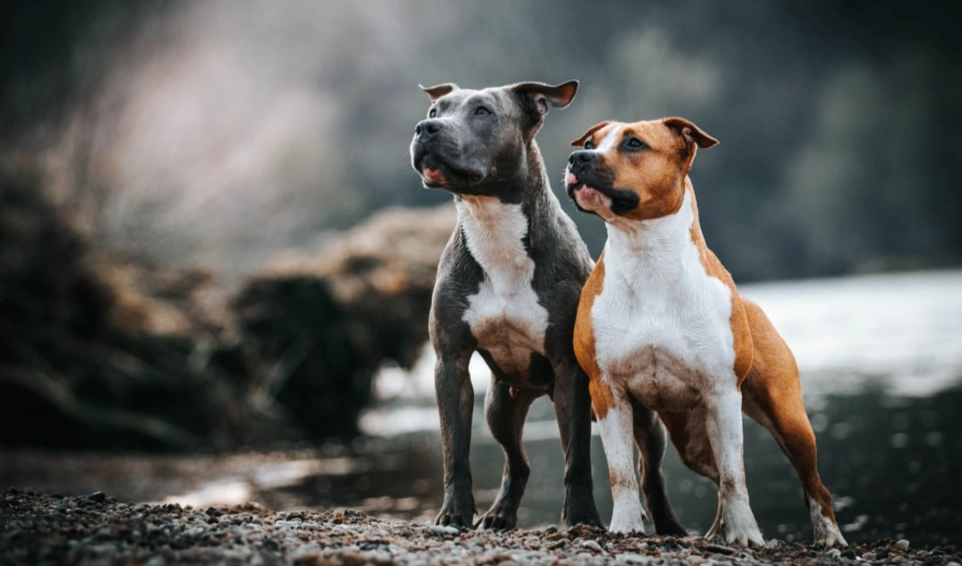
AmStaff vs. Pit Bull: Untangling the Family Tree
This is the biggest point of confusion, and frankly, where a lot of breed legislation gets it painfully wrong. The American Staffordshire Terrier and the American Pit Bull Terrier share the same 19th-century Bulldog-and-Terrier rootstock.
The divergence started in the early 20th century.
- The American Staffordshire Terrier path led to the American Kennel Club (AKC). Registration required a closed studbook and breeding for a specific conformation standard. The focus became structure, appearance, and a predictable, people-friendly temperament suitable for the show ring and home.
- The American Pit Bull Terrier path was managed by other registries like the United Kennel Club (UKC), which initially remained more open and historically valued performance traits. Some lines continued to be bred for work (e.g., weight pull, hog hunting) or, regrettably, for illegal fighting.
By the 1970s, they were effectively separate gene pools. You could, for a time, dual-register a dog with both the AKC and UKC, but that practice ended. Today, an AKC AmStaff and a UKC Pit Bull from show lines might look very similar—because they share that common ancestor recipe. But a Pit Bull from a working or game-bred line will often look and act differently from an AmStaff from show lines.
The public lumps them all together as "pit bulls." But for breeders, historians, and owners who care about genetics, the distinction in breeding goals over the last 80+ years is significant.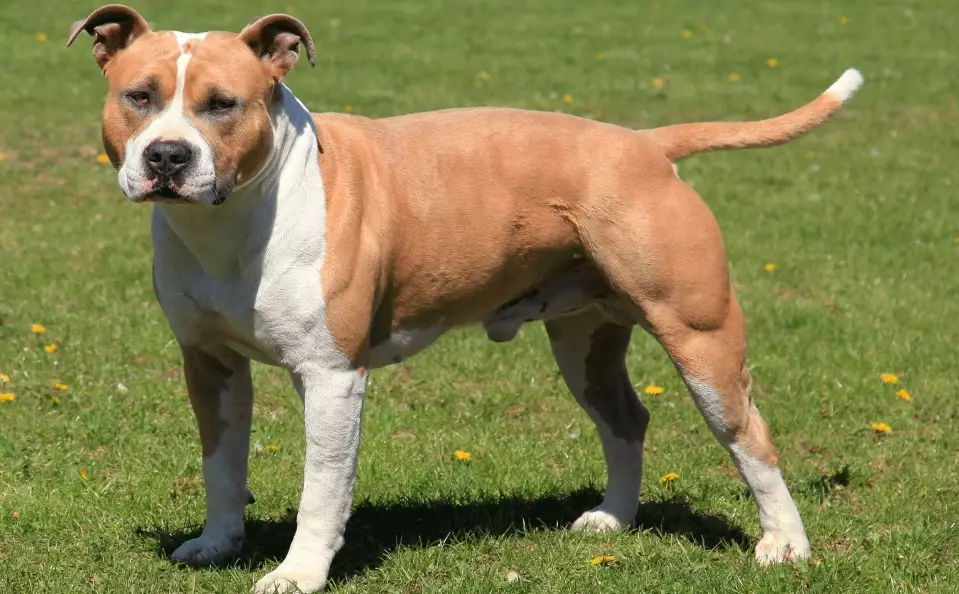
How to Care for Your American Staffordshire Terrier
Knowing their origin explains their needs. You have a powerful, intelligent, energetic dog with a deep-seated desire to work and please. Here’s what that means in practice.
Exercise: Non-Negotiable and Must Be Smart
An hour-long walk is just a warm-up. These dogs need vigorous daily exercise: running, hiking, structured play like fetch or flirt pole, or dog sports like agility, nosework, or weight pull. Boredom is your enemy. A bored AmStaff will find its own job, like remodeling your drywall.
Training: Consistency and Early Socialization
Start training and socialization the day you bring your puppy home. Their strength makes obedience non-optional. Use positive reinforcement (they are famously sensitive to their owner's tone). Expose them gently to every sight, sound, surface, and friendly person/dog you can. A well-socialized AmStaff is a wonderful ambassador; an unsocialized one can be fearful or reactive.
A common mistake? Assuming their natural affection for people means they don't need this work. They absolutely do.
Health Considerations from Their Lineage
Generally hearty, but their build predisposes them to certain issues. Responsible breeders test for: - Hip Dysplasia: Common in many muscular breeds. - Heart Conditions: Like congenital heart disease. - Skin Allergies: Some lines can be prone to them. - Cerebellar Ataxia: A genetic neurological disorder specific to the breed.
A good diet, maintaining a lean weight (so no "bulking up"), and regular vet checks are crucial. They are not outdoor dogs; they crave indoor family life.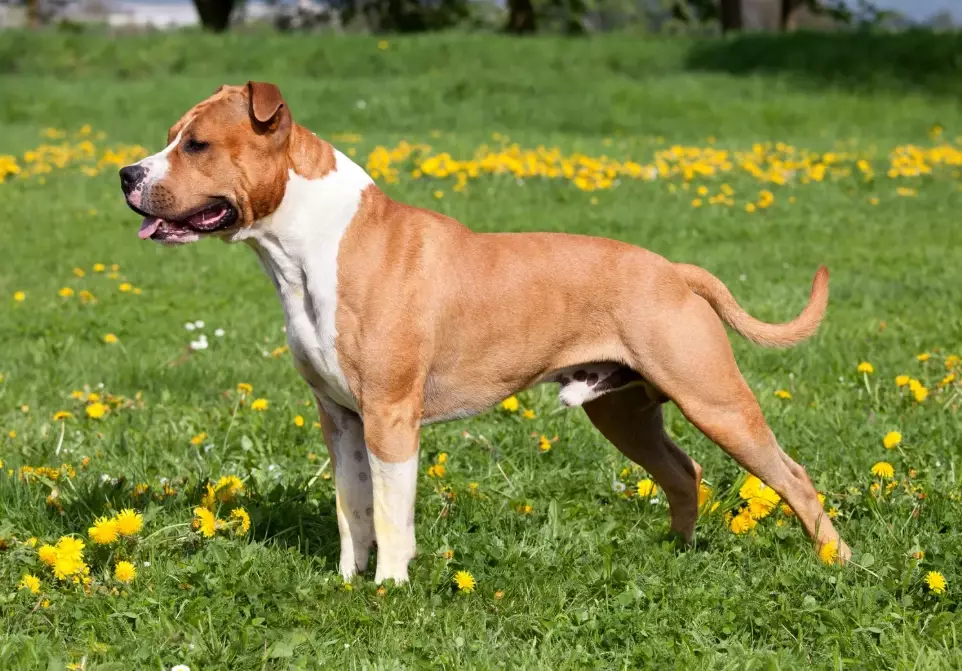
Your Questions, Answered
 So, what two breeds make an American Staffordshire Terrier? The ancestral ingredients are the Old English Bulldog and the old terrier breeds. But the modern dog is more than the sum of those historic parts. It's a product of a specific breeding journey—one that took a tough, working-class cross and refined it into a loyal, capable companion. Owning one means respecting that powerful legacy and committing to the training, exercise, and socialization it demands. Do that, and you'll have a friend whose courage is matched only by its devotion.
Reader Comments