Ask someone to picture a Beagle, and they’ll likely describe a classic tri-color: black, tan, and white. It’s the iconic look. But here’s something that surprises most new owners and even some seasoned dog lovers—the American Kennel Club (AKC) breed standard actually accepts a staggering 25 different color and marking combinations for Beagles. That’s right, twenty-five. From the familiar to the almost exotic-looking, the palette is far more diverse than the “Snoopy” stereotype suggests. Getting your Beagle’s color right isn’t just about aesthetics; it’s about understanding the breed’s genetics, identifying your dog correctly for registration, and even spotting potential red flags in breeding practices. Let’s cut through the confusion. The AKC groups Beagle colors into two main categories: standard hound colors and specific marking patterns. The key is that any acceptable color can be combined with the classic white markings (on the tip of the tail, feet, chest, and blaze on the face). The standard is surprisingly permissive, focusing on function over a rigid color scheme. Here’s the breakdown you won’t find neatly summarized on most breeder websites. I’ve sorted them not just by name, but by what you’re actually looking at on the dog. Notice something? "Lemon & White" is listed as both a tri-color and a bi-color. This is a classic point of confusion. A true lemon Beagle is a faded tan or red. In a bi-state, it's pale cream with white. In a tri-state, it's that pale cream plus darker (often black) markings on the saddle and head. The puppy you see labeled as "lemon" online might be either, and the final adult color can be hard to predict. So you’ve got your Beagle puppy home, and you’re staring at its fur, trying to match it to the AKC list. It’s not always straightforward. Here’s a step-by-step method I use after years of working with hounds. Step 1: Ignore the white (at first). Mentally subtract all the pure white areas—the chest, belly, feet, tail tip, and often a blaze on the face. Focus on the colored patches. Step 2: What's the dominant dark color on the back and ears? This is your primary color. Is it a true, jet black? A warm, chocolatey brown? Or a cool, slate gray (which is "blue")? Lighting matters. Look in natural sunlight. Black can look brownish in certain lights, and true "blue" is unmistakably gray, not just a dull black. Step 3: Look for the tan points. Check above the eyes, on the cheeks, inside the ears, on the legs, and under the tail. Are they a rich, reddish tan? A pale, almost white cream (lemon)? Or are they absent? If absent, you likely have a bi-color. Step 4: Check the white markings for ticking. Are the white parts pure, or are they covered in a sprinkle of small, dark freckles? If freckled, you add "and Ticked" to the color name (e.g., "Black, Tan & White and Ticked"). This is the biggest surprise for new owners. Beagle puppies are not born with their final adult colors. A puppy that appears almost all black and white at birth can develop rich tan points by 4-8 weeks. Lemon puppies are often born looking nearly white, with their pale cream color coming in later. The dark saddle (the patch on the back) can spread or recede. I once brought home a puppy I swore was a classic black, tan, and white. By six months, the black on his back had faded significantly to a dark brown, especially in the sun. His official color became "Brown, White & Tan." It’s a living canvas. Technically, all colors on the AKC list are "standard." But some are statistically less common in the show ring and responsible breeding programs. Then there are colors outside the standard that pop up due to recessive genes. True Rarities Within the Standard: "All White" Beagles with just minimal patches of color are quite rare. A true, clear "Blue, Tan & White" (a clean slate gray) is also less commonly seen than the classic black. A rich, deep "Red & White" without any black hairs (called a "clear red") is highly prized and less common than reds with some black ticking. Non-Standard (and Problematic) Colors: This is where you need to be an informed buyer. A responsible breeder focused on health, conformation, and temperament will produce litters within the spectrum of normal Beagle colors. If a breeder heavily advertises "rare" colors at premium prices, consider it a red flag. You're buying a companion, not a limited-edition sneaker. You don't need a biology degree to get the gist. Beagle coat color is controlled by a handful of genes switching pigments on and off. Think of it like a recipe. The Base: Eumelanin (black/brown) and Phaeomelanin (red/tan/yellow). All colors are variations of these two pigments. The Key Genes: So, a classic Black, Tan & White Beagle has the genetic recipe: B- (black pigment), D- (not dilute), ky/ky, at/at (tan point pattern), and sp/sp (for white spotting). When a "Blue" Beagle appears, it means both parents carried a hidden recessive 'd' gene: B- (black), d/d (dilute), ky/ky, at/at, sp/sp. The black gets watered down to gray. This is why two perfectly normal-looking tri-color Beagles can produce a litter with blues, lemons, and chocolates—they were both carrying those hidden recessive genes. Understanding Beagle colors is more than a party trick. It deepens your appreciation for the breed's genetics, helps you communicate accurately with vets and registries, and makes you a smarter consumer when looking for a puppy. Forget the idea of a "rare" coat being better. The real treasure is a healthy, happy hound, whether it's dressed in the most common tri-color or the most delicate lemon and white.What's Inside This Guide
What Are the Official AKC Beagle Colors? (The Complete List)

Color Category
Specific Color Names (AKC Listed)
What It Looks Like
How Common?
Tri-Color
Black, Tan & White; Black, White & Tan; Blue, Tan & White; Brown, White & Tan; Lemon & White; Red & White; Tan & White.
Three distinct colors. The order in the name often indicates dominance. "Black, Tan & White" is the classic. "Blue" is a diluted black (slate gray). "Lemon" is a very pale, creamy tan.
Extremely common. Black/Tan/White is the classic.
Bi-Color
Black & White; Black & Tan; Blue & White; Brown & White; Brown & Tan; Lemon & White; Red & White; Tan & White.
Two primary colors. "Lemon & White" appears here too—it's often a very faint bi-color. "Red & White" is a rich, fox-red with white.
Very common. Red & White and Lemon & White are particularly popular.
Single Color with Markings
All White; Black; Blue; Brown; Tan; Red; Lemon.
Predominantly one base color, but must have the classic white Beagle markings to be show-legal. A pure, all-over color without white is a fault.
Less common. "All White" with patches is rare. Solid Black/Tan/Red without white is atypical.
Ticked or Spotted
Any of the above colors combined with Ticking or Mottling.
Small, isolated spots of color on the white areas of the coat. Think of the freckles on an English Setter. This is not the same as large patches.
Common in certain lines. Adds a speckled appearance to the feet and legs.

How to Identify Your Beagle's Color Correctly (Beyond the Basics)

The Puppy Color Shuffle: Why Your Beagle's Coat Will Change
Are There Rare Beagle Colors? What You Need to Know
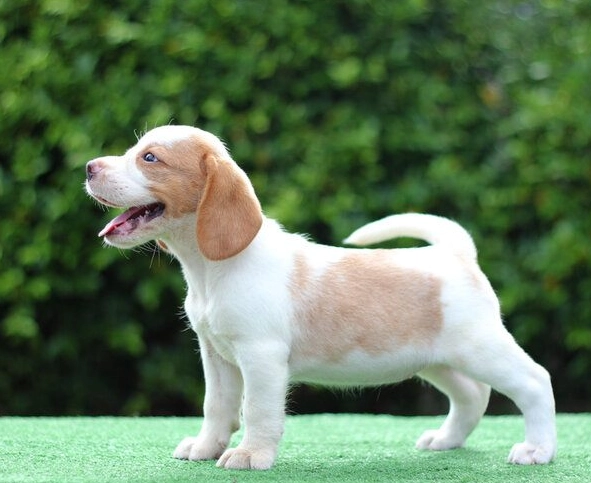

The Genetics Behind Beagle Coat Colors (A Simple Breakdown)


Your Beagle Color Questions Answered
Pro Tip: When filling out AKC paperwork, don't just write "tri-color." Be specific. Is it "Black, Tan & White" or "Brown, White & Tan"? That distinction matters for accurate registration. I’ve seen litters where puppies from the same parents were registered incorrectly because the owner used the generic term.
Watch Out For: Some breeders might advertise "rare silver Beagles" or "lavender Beagles." These are typically diluted colors (blue or chocolate) described with fanciful terms. Stick to the standard AKC nomenclature to avoid overpaying for a marketing gimmick.
How can I tell what color my Beagle puppy will be as an adult?
Look at the roots of the fur and the skin pigment. For lemon puppies, the skin around the nose and eyes often has a pinkish or light brown hue, not black. For tri-colors, the tan points might be just faint whispers at birth. The best indicator is often the color of the paw pads—black pads usually mean black pigment in the coat, while brown or pinkish pads suggest liver/chocolate or dilute colors. But accept there's always an element of surprise until they're about 4-6 months old.
Does a Beagle's color affect its health or personality?
There is no scientific evidence linking specific standard colors to personality traits in Beagles. A lemon Beagle is not "sweeter" and a tri-color is not "more stubborn." However, the pursuit of non-standard colors like merle can be linked to health problems due to irresponsible breeding practices. Also, some anecdotal reports suggest dilute-colored dogs (blues, lilacs) may have slightly higher incidences of skin conditions like Color Dilution Alopecia, but this is not well-documented in Beagles specifically.
My Beagle's black fur is turning reddish in the sun. Is this normal?
Absolutely normal. It's called "sun bleaching" or "rusting." The black eumelanin pigment can oxidize and lighten to a rusty brown, especially on the back, ears, and tail. It doesn't change the dog's genetic color—it's just a cosmetic effect of UV exposure. You'll see it most in dogs who spend a lot of time outdoors.
Why do some Beagles have a "blue tick" or "red tick" coat?
This refers to heavy ticking (those freckles) in the white areas. "Blue tick" means the freckles are black or dark gray, giving a blueish cast from a distance. "Red tick" means the freckles are tan or red. It's simply a description of the ticking color, not a separate color category. A heavily ticked Beagle is still officially its base color "and Ticked."
Is a "lemon" Beagle just a very pale Red & White?
Genetically, yes. Lemon is an extreme dilution of the red/tan pigment (phaeomelanin). The line between a very light red and a lemon is blurry. The AKC accepts both, but for showing, a clear lemon (with minimal darker hairs) is distinct from a light red (which may have some darker red hairs interspersed). In practice, if the dog looks creamy white with the faintest hint of yellow, it's a lemon.
Comment