Stuck between the dapper Boston Terrier and the bat-eared French Bulldog? You're not alone. These two compact, charismatic breeds top the charts for city dwellers and families alike, but beneath their similar silhouettes lie worlds of difference. I've spent over a decade working with both breeds, from show rings to rescue centers, and I can tell you the choice isn't just about looks—it's about matching a living, breathing personality to your daily life. Let's cut through the cute photos and get into what it's really like to live with each one.
What's Inside?
- Boston Terrier vs French Bulldog: Key Differences at a Glance
- Appearance Breakdown: More Than Just Ears
- Temperament and Personality: The Family Clown vs The Charming Couch Potato
- Health Concerns: What You Must Know Before You Buy
- Daily Care, Grooming, and Real-World Costs
- Making Your Choice: Which Breed Suits Your Lifestyle?
- Your Questions, Answered
Boston Terrier vs French Bulldog: Key Differences at a Glance
Before we dive deep, here's a snapshot. This table isn't just a list of facts; it's a reflection of how these dogs will interact with your world.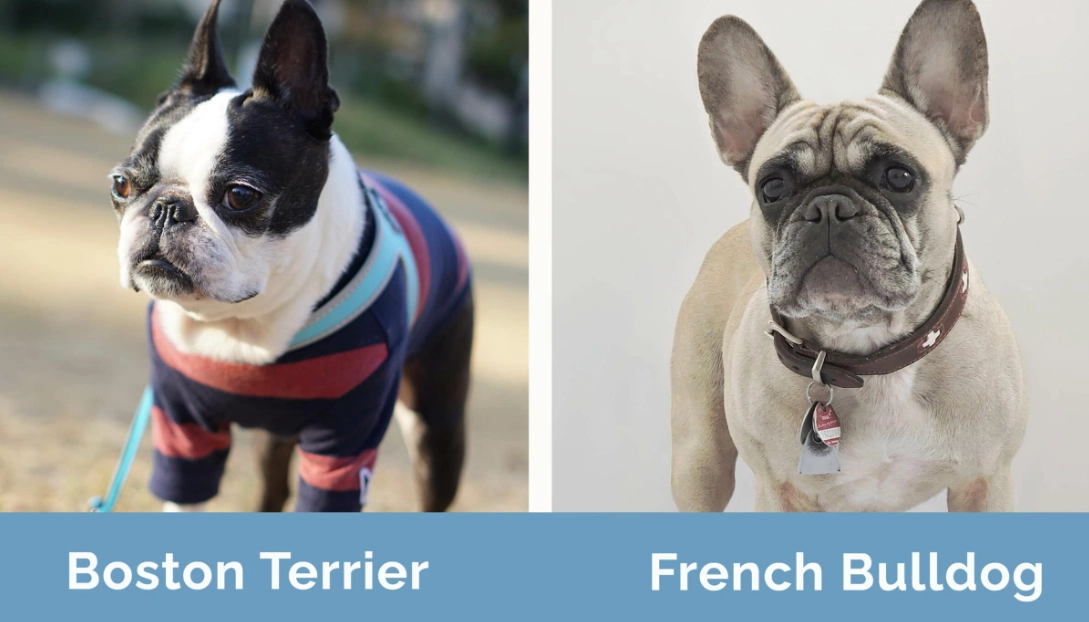
| Feature | Boston Terrier | French Bulldog |
|---|---|---|
| Build & Size | Leaner, more athletic. 12-17 lbs. Looks "balanced." | Stocky, muscular, heavy-boned. 16-28 lbs. Feels denser. |
| Energy Level | Moderate to high. Needs daily brisk walks and play. | Low to moderate. Happy with short walks and lots of naps. |
| Personality Vibe | The clever, energetic class clown. More expressive. | The adaptable, affectionate couch potato. More placid. |
| Grooming | Minimal. Short coat, moderate shedder. | Minimal. Short coat, moderate shedder. More wrinkle care. |
| Barking Tendency | More vocal. Will alert bark. Can be talkative. | Quieter. Less prone to nuisance barking. |
| Major Health Focus | Eye issues (cataracts), patellar luxation. | Brachycephalic Syndrome, spinal issues, heat sensitivity. |
| Typical Price Range | $1,500 - $3,000 from a reputable breeder. | $3,000 - $6,000+ from a reputable breeder. |
See the divergence? One's built for a brisk morning jog (and then a couch cuddle), the other is your ultimate lounge partner. The price difference alone tells a story about demand and the complexity of breeding Frenchies responsibly.
Appearance Breakdown: More Than Just Ears
Everyone notices the ears first—Boston's perky points versus the Frenchie's iconic "bat ears." But that's just the opener.
Pick up a Boston Terrier. You'll be surprised by how light and springy they feel. They have a square, proportional build, a defined waist, and a graceful neck. Their expression is alert, often curious. The "tuxedo" coat isn't just for show; it's a breed standard.
Now, pick up a French Bulldog. It's like picking up a solid brick of muscle wrapped in velvet. They are deceivingly heavy for their size, with a broad chest, a roached back, and that distinctive, compact frame. Their face is flatter (more brachycephalic) than the Boston's, giving them that smushed, soulful expression people adore.
Here's a nuance most blogs miss: The Boston's muzzle, while short, has more length and definition than the Frenchie's. This isn't just aesthetics; it has direct, major implications for their breathing and health, which we'll get to.
Temperament and Personality: The Family Clown vs The Charming Couch Potato
This is where you'll feel the biggest difference in your home.
The Boston Terrier: Energetic & Expressive
Bostons are often described as "little gentlemen," but that undersells their vivacity. They are intelligent, sometimes stubborn, and have a sense of humor. They'll learn tricks quickly, but on their own terms. I've known Bostons who invent their own games, like hiding toys and "asking" you to find them. They form intense bonds and can be velcro dogs, following you from room to room. Their energy comes in bursts: a 20-minute play session, a zoomie around the yard, then a solid snooze at your feet. They are generally great with kids and other pets, but their playful nature can be a bit much for very small children or very elderly dogs.
The French Bulldog: Adaptable & Affectionate
Frenchies are the quintessential companion dog. Their primary goal is to be near you, preferably in a sunbeam or under a blanket. They are remarkably adaptable to different environments—busy apartments, quiet houses, it doesn't matter as long as you're there. They are less likely to initiate play than a Boston but are utterly charming and playful when they do. Their stubborn streak is legendary; if they don't want to move, they become a 25-pound paperweight. They tend to be more placid with visitors and less alert-oriented. While affectionate, they can be a bit more independent in their affection, choosing the warmest spot over your lap sometimes.
Personal Take: I love both temperaments, but for different lives. The Boston keeps you on your toes; the Frenchie helps you relax. A common mistake is assuming a Frenchie is "lazy." They're not lazy; they are conformationally limited. That heavy, compact body and short face aren't built for endurance. A Boston, conversely, can be a genuine hiking buddy for a moderate trail.
Health Concerns: What You Must Know Before You Buy
This isn't scare-mongering; it's responsible ownership. Both breeds have challenges, but the scale is different.
Boston Terriers are generally the healthier of the two. Their main concerns are ocular: cataracts, corneal ulcers (their big, prominent eyes are vulnerable), and glaucoma. Patellar luxation (trick knee) is also common. A good breeder will have OFA certifications for eyes and knees. They can snore and have some breathing issues, but typically not to the debilitating degree of the Frenchie.
French Bulldogs are, frankly, a veterinary challenge. Their flat faces cause Brachycephalic Obstructive Airway Syndrome (BOAS). This isn't just cute snorting; it's a serious respiratory condition that can lead to surgery. According to a landmark study from the Royal Veterinary College, French Bulldogs are the breed most prone to BOAS. They overheat dangerously quickly. They often require artificial insemination and C-sections to whelp. Spinal issues (like hemivertebrae), skin allergies, and ear infections are frequent. The cost of ownership is massively impacted by this.
You must find a breeder who prioritizes health: breeding for longer muzzles, wider nostrils, and proven health clearances. The American Kennel Club and the French Bulldog Club of America are good starting points for breeder referrals.
Daily Care, Grooming, and Real-World Costs
Let's talk about the ongoing commitment beyond love.
Exercise Needs: Active vs. Lounge
Boston: Needs 30-60 minutes of activity daily. A walk isn't enough. They need mental stimulation—fetch, flirt pole, puzzle toys. A bored Boston can be destructive.
Frenchie: 20-30 minutes of gentle walking, split into cooler parts of the day. Avoid intense heat or humidity entirely. Their exercise is more about mental engagement and sniffing than physical exertion.
Grooming & Maintenance
Both have easy coats. Weekly brushing suffices. The Frenchie's wrinkles, especially the deep nose roll, need daily cleaning and drying to prevent painful infections. Their tails often have a tight corkscrew that needs checking and cleaning underneath. Bostons have fewer folds, but their large eyes may need regular wiping.
First-Year Cost Breakdown (Beyond Purchase Price)
This is a realistic estimate. Frenchie costs are higher at every stage.
- Initial Vet & Supplies: $500-$800 (microchip, vaccines, spay/neuter, crate, bed). Frenchie spay/neuter may cost more due to anesthesia risks.
- Monthly Food & Preventatives: $80-$120. High-quality food is non-negotiable.
- Boston Annual Vet Care: $400-$700 for check-ups, preventatives.
- Frenchie Annual Vet Care: $700-$1,200+. Expect added costs for allergy meds, ear infections, or BOAS consultations.
- Pet Insurance: CRITICAL. For a Frenchie, expect $70-$120/month. For a Boston, $50-$80/month. This is the single best financial decision you can make.
I've seen Frenchie airway or spinal surgeries cost $5,000-$10,000. Insurance is not optional.
Making Your Choice: Which Breed Suits Your Lifestyle?
Stop thinking about which is cuter. Start diagnosing your life.
Choose a Boston Terrier if: You have an active-ish lifestyle. You want a dog that can join you for walks, play in the yard, and still be a couch buddy. You don't mind some vocalization. You want a generally healthier breed with lower lifetime vet costs. You enjoy a dog with a mischievous, expressive personality.
Choose a French Bulldog if: Your lifestyle is calm and indoorsy. You're a homebody. You live in a climate with mild temperatures. You have the significant financial resources for purchase, insurance, and potential health issues. You value a quiet, deeply affectionate, and low-energy companion who is content with Netflix marathons.
Personally, I think the Boston is the more versatile and sustainable choice for most people. The Frenchie's health problems weigh heavily on me as an enthusiast. The demand for extreme features has caused real suffering.
Your Questions, Answered
The bottom line? Both Boston Terriers and French Bulldogs will steal your heart. But one might fit your reality better than the other. Look beyond the Instagram filters, be brutally honest about your budget and daily routine, and choose the dog whose needs you can meet for its entire life. That's how you find your perfect compact companion.
Reader Comments